Dunstan Chestnut Tree (6’–8′) – Farm Pickup Only
$35.00
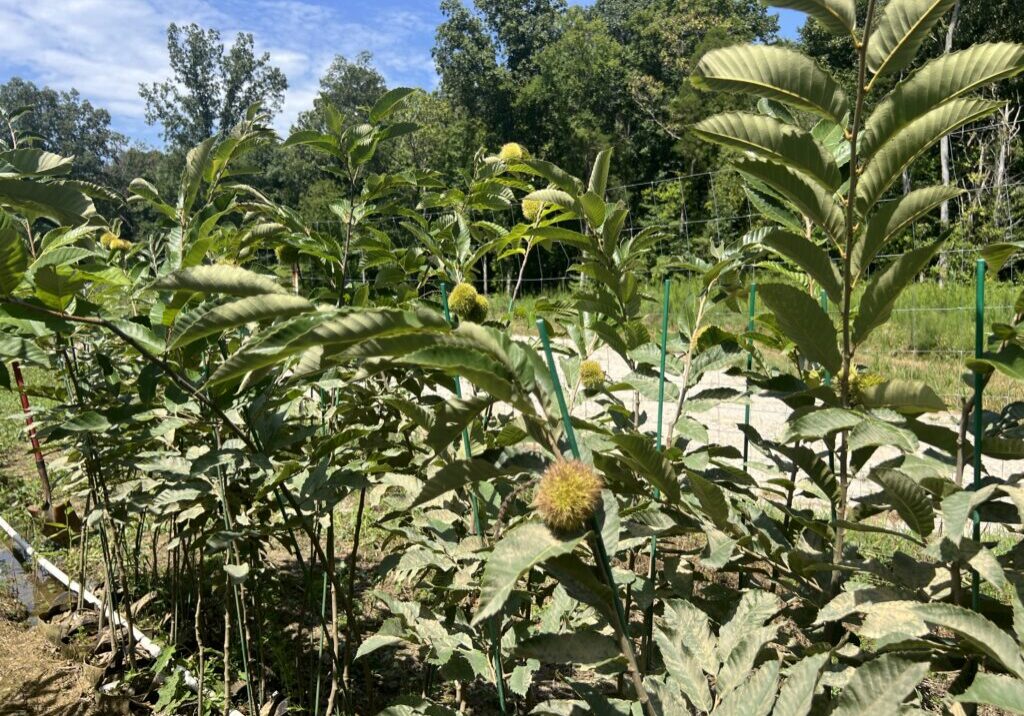
Dunstan chestnut tree (6’–8′) from EBB Farms in western Kentucky – the farm lab for United Chestnuts. This farm‑pickup tree is for growers who want a big, blight‑resistant, fast‑growing Dunstan that can move more quickly toward nuts, wildlife draw, and long‑term mast production.
About this product
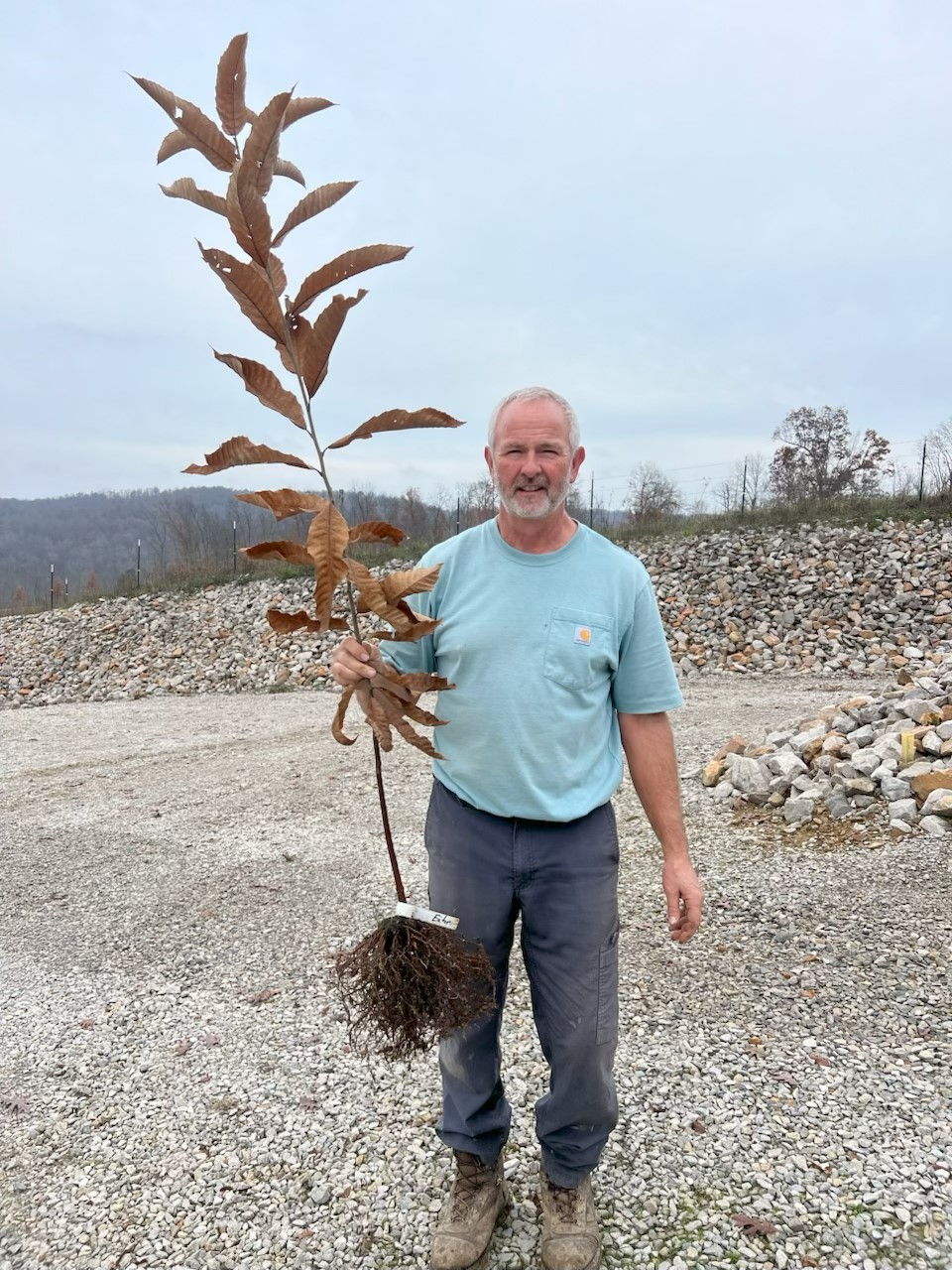
First, this product is a single Dunstan chestnut tree, about 6’–8′ tall, available for farm pickup only at EBB Farms in western Kentucky – the farm lab for United Chestnuts. We grow and hold these trees on‑site so you can see real stock before you load it.
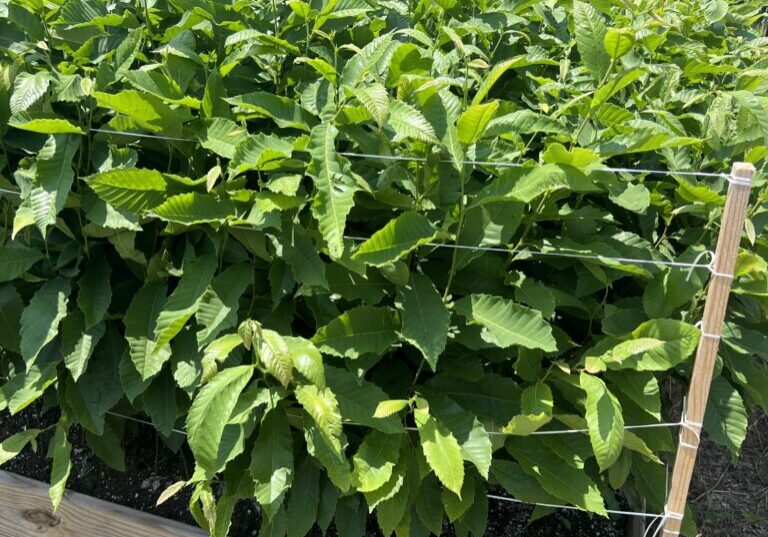
Next, Dunstan chestnut trees are hybrids of American and Chinese chestnuts, bred to combine American form and nut quality with Chinese‑type blight resistance. They are known for fast growth, strong vigor, and the potential to begin bearing nuts in roughly 3–5 years under good conditions, which is much quicker than many nut trees.
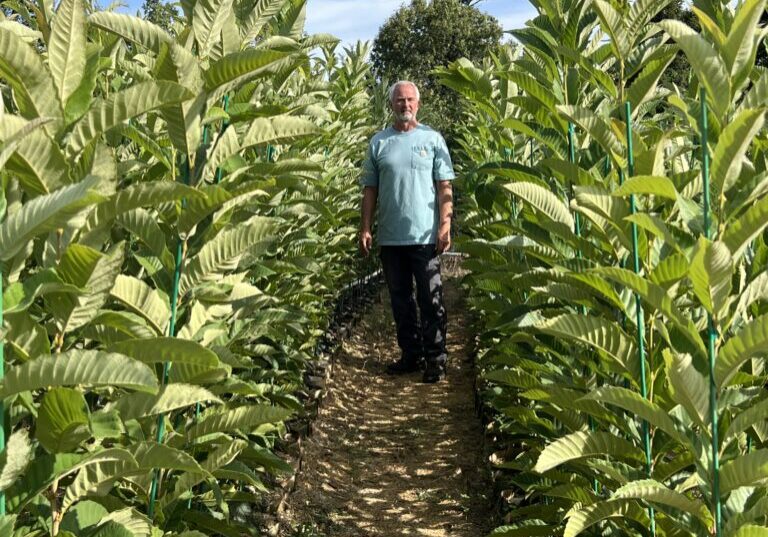
In addition, this Dunstan chestnut tree is already tall enough to show structure and presence. Because of this, it works well as an anchor tree in a wildlife strip, a centerpiece in a homestead planting, or a leadership tree in a row that you later fill in with smaller seedlings.
Key details at a glance:
-
Type: Dunstan chestnut tree (American × Chinese hybrid)
-
Quantity: Single tree
-
Height: ~6’–8′ at pickup
-
Availability: Farm pickup only at EBB Farms (no shipping)
-
Use: Wildlife food plots, homesteads, orchards, and habitat plantings where you want instant presence and faster path to mast
-
Audience: Growers who want one larger Dunstan chestnut tree to jump‑start mast, wildlife draw, or demonstration plantings
Why a single 6’–8′ Dunstan chestnut tree?
Overall, a single 6’–8′ Dunstan chestnut tree is about speed, presence, and demonstration.
-
Faster visual impact: A 6’–8′ Dunstan chestnut tree already looks and feels like a real tree, not just a whip, which helps in showpiece or educational plantings.
-
Quicker path toward nuts: With Dunstan’s fast growth and early bearing window, a larger starting size can help you move more quickly toward mast and wildlife use than planting only small seedlings.
-
Wildlife and mast anchor: One big Dunstan in the right spot can become an anchor tree for a food plot or a mast corner that you build around with smaller trees and shrubs.
-
Easy to add to existing plans: You can drop a single large Dunstan into a planting you already have going and shift the feel of that space immediately.
If you want a Dunstan chestnut tree that feels substantial on day one instead of waiting years for seedlings to reach this size, this farm‑pickup option is for you.
EBB Farms – the farm lab for United Chestnuts
At EBB Farms, the farm lab for United Chestnuts, we run a working chestnut orchard in western Kentucky and use bigger trees like this Dunstan chestnut tree (6’–8′) where we need immediate structure or a visible demonstration tree.
We plant Dunstan chestnut trees in key locations to test how larger stock performs versus smaller seedlings and to show visitors how a chestnut tree looks at different stages. The same kind of Dunstan chestnut tree we use for those purposes is what you pick up here.
Root systems, handling, and other options
This Dunstan chestnut tree is grown to have a substantial root system matched to its top growth so it can handle transplanting when you get it into the ground.
If you are planning a bigger planting, you can also explore:
-
10‑ and 20‑tree bundles of Dunstan chestnut seedlings (3’–4′) for block‑level mast and wildlife planting
-
Larger Dunstan chestnut trees in other height classes as they become available (check the site or ask about upcoming stock)
-
10‑ and 20‑tree bundles of other cultivars (UMCA PQK, Sleeping Giant, Miller) to build mixed blocks around your larger Dunstan anchor trees
Many growers like to plant one or a few large Dunstan chestnut trees as instant anchors, then surround them with seedlings and understory plants over the next few seasons.
Rooted in real‑world experience
At EBB Farms, we plant larger Dunstan chestnut trees where we want to shorten the wait between “we planted a tree” and “this planting is telling us something real.” We still focus on fundamentals—good holes, water, mulch, and protection from deer and equipment—because size alone doesn’t fix bad establishment.
We know moving a 6’–8′ tree takes planning. For that reason, we share what has gone well and where we have had to adjust, including how we stake, protect, and manage bigger trees alongside smaller seedlings in the same system.
Learn with us: tours, stories, and the podcast
The best way to understand where a big Dunstan chestnut tree fits is to see examples.
You can visit EBB Farms for a farm tour. We walk past larger Dunstan trees in the field, show how they sit next to younger plantings, and talk through where that size class makes the most sense.
You can also listen to the Branching Out: Growing Together podcast and browse unitedchestnuts.com/resources for videos and stories about using bigger stock in real farm and habitat projects.
Custom orders and collaboration
Do you want several Dunstan chestnut trees (6’–8′), or want to combine this size class with bundles of smaller Dunstan or other cultivars? For custom orders, scheduling pickup, or questions about your context, contact Melanie:
Email: [email protected]
Phone: 678.234.4894
We’re glad to help you plug this Dunstan chestnut tree into a bigger plan for wildlife, nuts, and long‑term resilience.
EBB Farms – the farm lab for United Chestnuts and learning and development hub for the chestnut community. Every Dunstan chestnut tree you plant, especially at this size, helps speed up real‑world learning, wildlife food, and a more connected, future‑ready chestnut ecosystem.
Looking for more?