
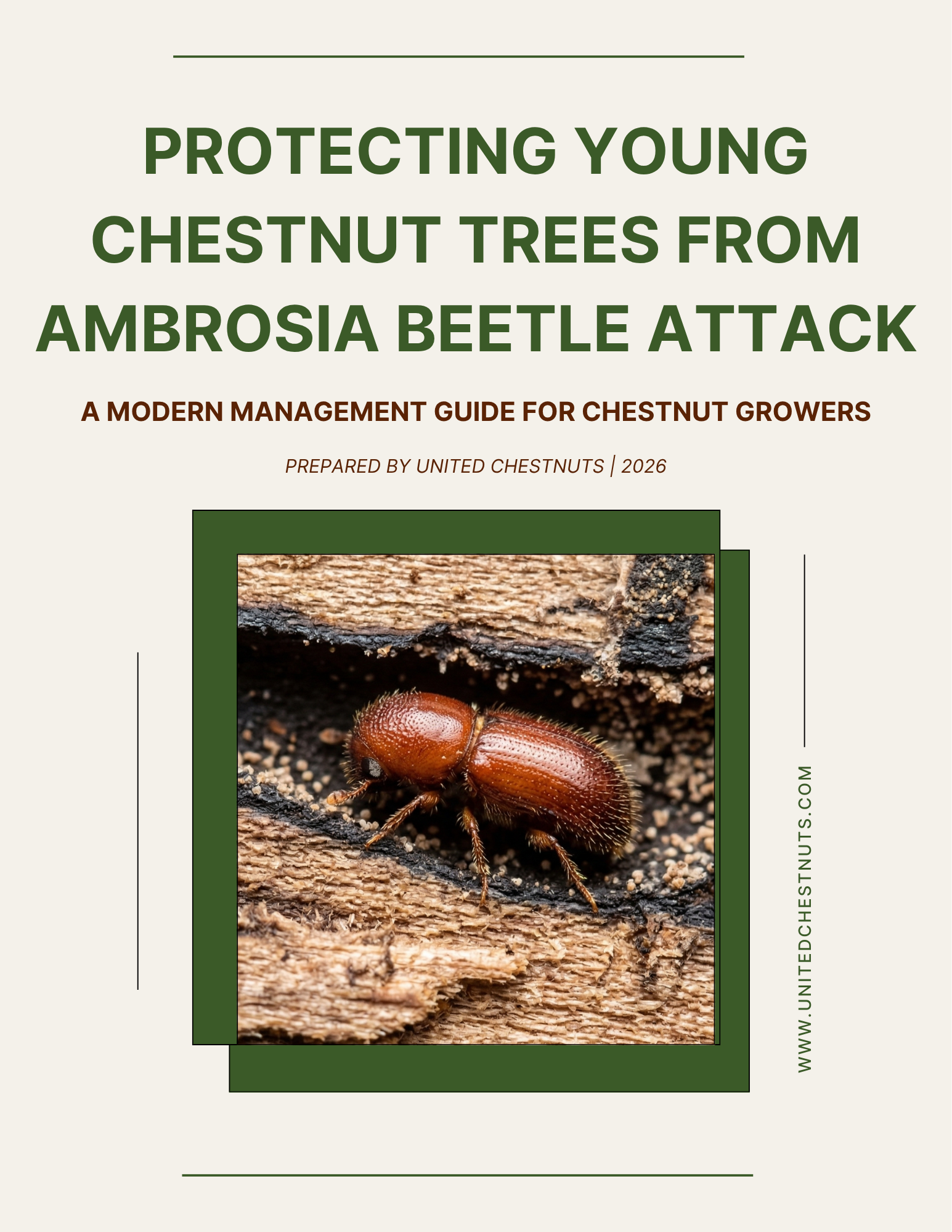
Protecting Young Chestnut Trees from Ambrosia Beetle Attack: A Modern Management Guide
$15.00
Protect your orchard investment with the 2026 Ambrosia Beetle Chestnut Management Guide. This 21-page digital playbook provides growers in the Southeast and Midwest with a research-backed strategy for defending young trees (1/2 to 4 inches in diameter) against lethal wood-boring attacks.
Ambrosia beetle chestnut management is a critical factor for growers investing in long-term soil health, carbon sequestration, and perennial crop systems. While chestnuts are a robust legacy crop, the first few years of establishment are when your investment is most vulnerable to wood-boring pests.
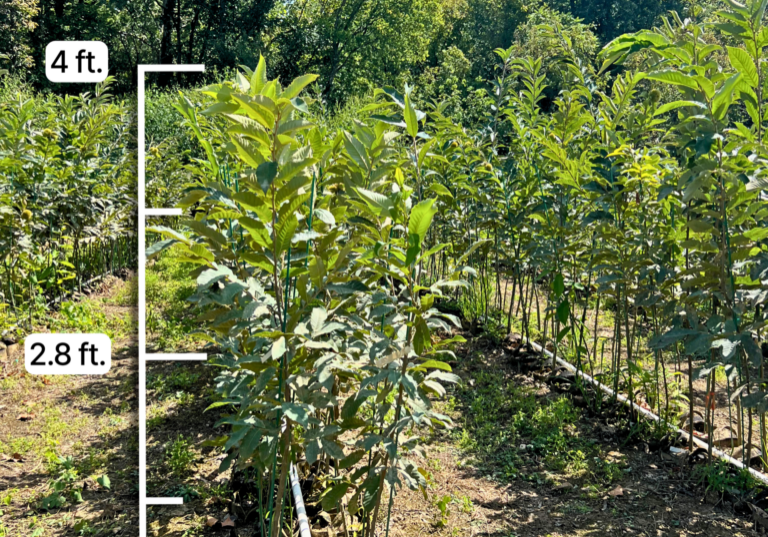
During this window, the Asian ambrosia beetle—a rice-sized insect targeting trunks between ½ and 4 inches in diameter—can be devastating. These beetles don’t eat wood; they cultivate a symbiotic fungus inside the trunk that physically blocks the vascular flow. This cuts off water and nutrients right when your trees are pushing new spring growth and need them most.
This 21-page guide walks you through the biology, monitoring strategies, and integrated management approaches that help protect young chestnuts during their most vulnerable years—so your trees can reach the size where their natural defenses take over.
What You’ll Learn:
- The biology behind the attack: Why beetles target stressed trees, how ethanol signals work, and what makes young chestnuts chemically conspicuous
- Temperature-driven flight windows: How to track regional emergence patterns and predict when your orchard becomes vulnerable
- Monitoring systems that actually work: Setting up ethanol-baited traps and conducting visual field inspections
- Cultural practices that reduce risk: Soil drainage, irrigation timing, and stress reduction strategies tailored to chestnut establishment
- Preventative chemical barriers: The TACF spray protocol, application timing, and considerations for minimizing off-target impact
- Sanitation and response protocols: What to do when you find an infected tree, and how to prevent spread to healthy stock
- Emerging technologies: Semiochemical push-pull strategies and biological controls currently in research trials
Why This Guide Matters:
Chestnuts are different. They’re a perennial system with a specific set of establishment challenges that don’t always fit conventional tree crop models.
Ambrosia beetles are part of that reality—especially in the Southeast, Southwest, and lower Midwest, where beetle pressure coincides with spring planting stress. Understanding how to manage this pest isn’t about fear. It’s about informed decision-making during the years when your trees are building the root systems and structure that will support decades of production.
Perfect For:
- Growers establishing new chestnut plantings
- Orchards in GA, AL, SC, TN, KY, NC, VA, TX, and MD
- Anyone managing trees in the ½ to 4-inch diameter range
- Farmers integrating chestnuts into regenerative or agroforestry systems
What’s Inside:
- Complete breakdown of beetle biology and host selection
- Regional flight timeline maps for the Southeast and Mid-Atlantic
- 6-step action plan for integrated beetle management
- Research summaries from TACF, university extension programs, and USDA trials
- Environmental considerations and alternatives to broad-spectrum insecticides
- Next-generation strategies including trap trees and semiochemical repellents
This guide synthesizes current research and proven grower protocols into a practical playbook for protecting your investment during the establishment years.
Format: PDF Digital Download | 21 Pages | 2026 Edition