
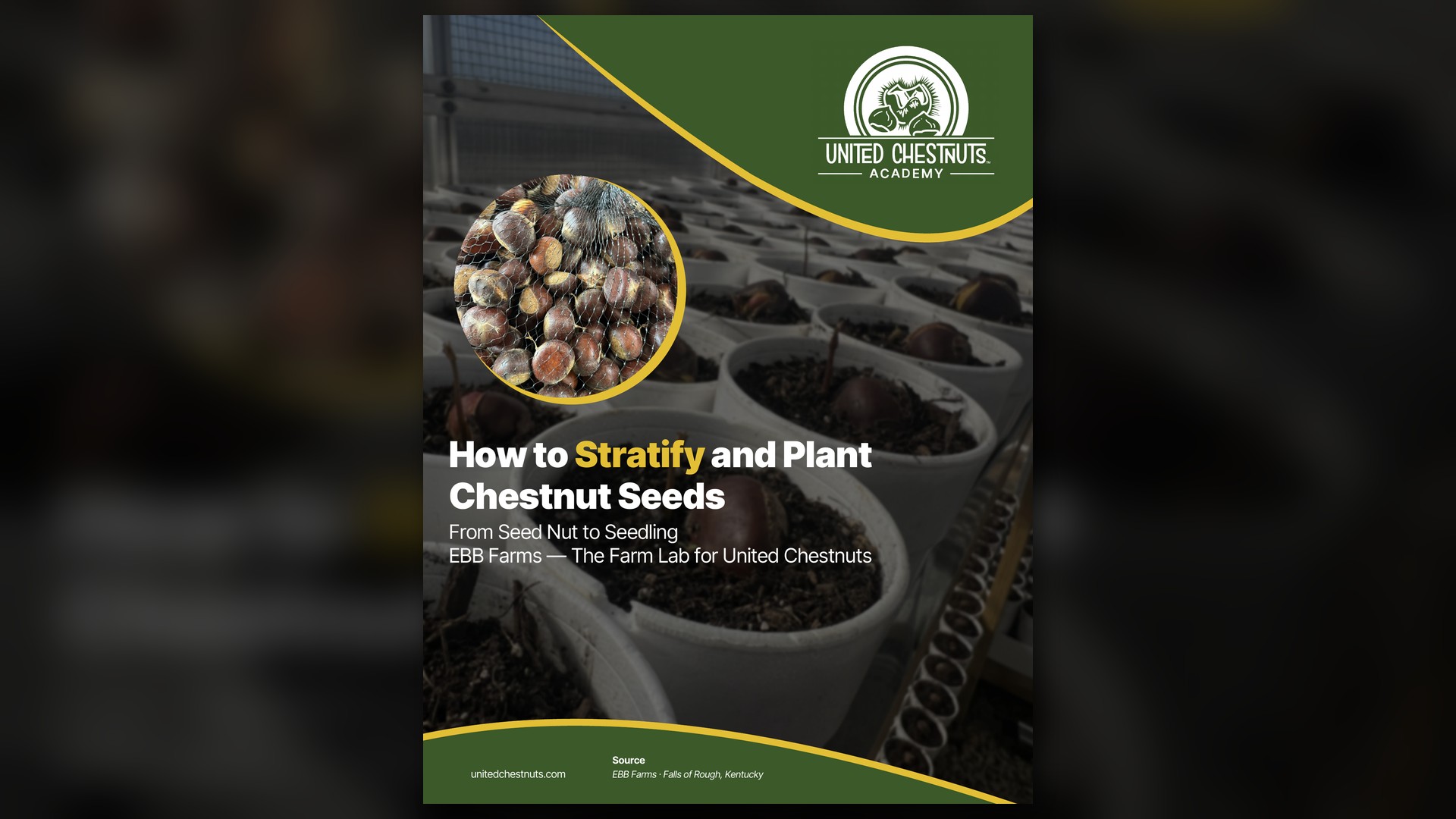
How to Stratify and Plant Chestnut Seeds
$15.00
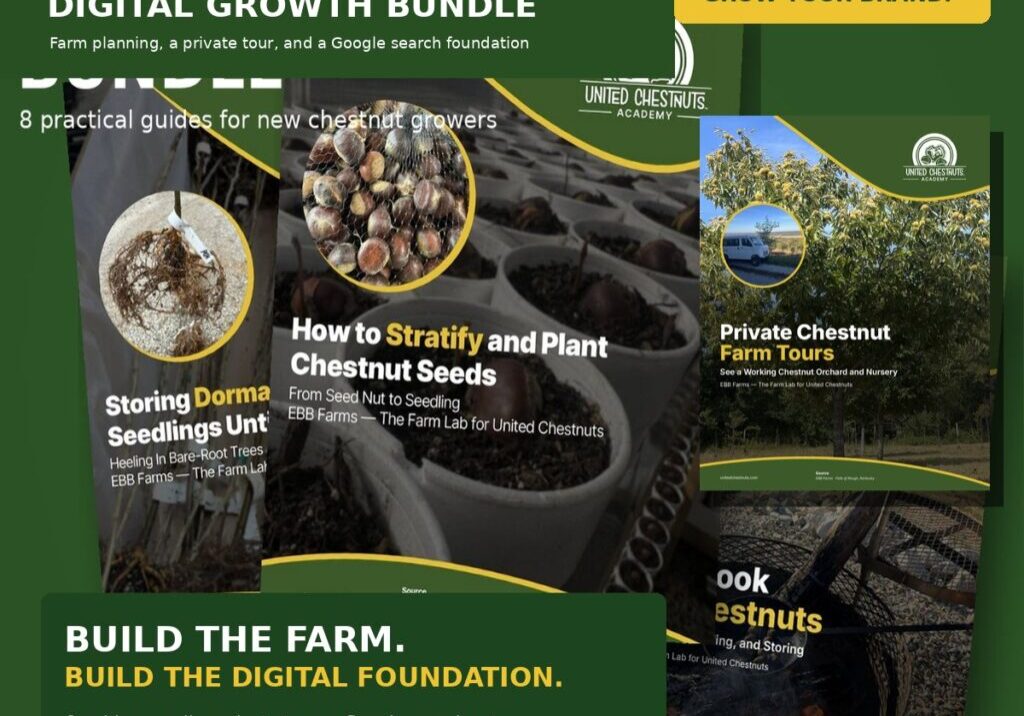
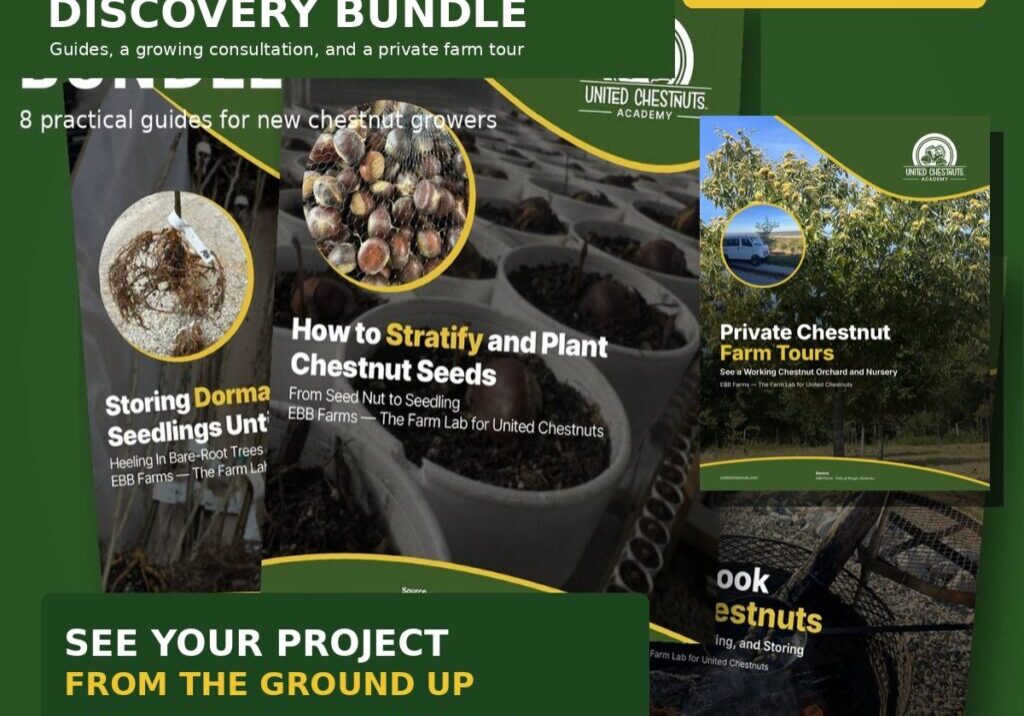
Seven pages on how to stratify chestnuts and grow them into seedlings, the way we do it at EBB Farms. From a one-gallon bag of damp peat moss to a 3-gallon grow bag, every step is here.
Chestnut seeds need a cold, moist winter before they’ll sprout. Once you know how to stratify chestnuts, you can recreate that winter in your own refrigerator. From there, you can grow your own seedlings from seed nuts.
This seven page guide comes from EBB Farms in Falls of Rough, Kentucky, the farm lab for United Chestnuts. It’s the same method we use every year in our own greenhouses.
How to Stratify Chestnuts, Step by Step
– Prepare a one-gallon zip-top bag of damp peat moss
– Layer about 50 seed nuts into the bag, then poke pinholes so they can breathe
– Refrigerate the bag at 33–40°F, and never let it freeze
– Check moisture every week or two, and remove any soft or moldy nuts
– Watch for the taproot, and plant once it just pokes out of the nut
When to Start Stratifying Chestnuts
At EBB Farms, we start in November. The process generally takes two to three months, so it pays to plan ahead. You can also keep your nuts in a sealed zip-top bag in the fridge until you’re ready to begin.
From Sprouted Nut to Seedling
Once the root appears, the guide shows you how to plant each nut in an 8-inch cup. Next, you’ll learn when to pot up into a 3-gallon grow bag, and why we cut off the nut. Finally, you’ll harden off your seedlings and plant them out once they go dormant.
At EBB Farms, our trees generally grow to 4 to 8 feet in the grow bag.
Seed Nuts, Planting, and More
Our chestnuts ship float tested, heat treated, and inspected, but not stratified. When your trees are ready, our Tree Planting Guide covers planting and protection. You’ll find more resources in the United Chestnuts Academy and at EBB Farms. And if you are interested in the chestnut industry, consider joining Chestnut Growers of America.