December 10, 2025
Air-Pruned vs. Grow-Bag Nursery Chestnut Seedlings: What’s the Difference?
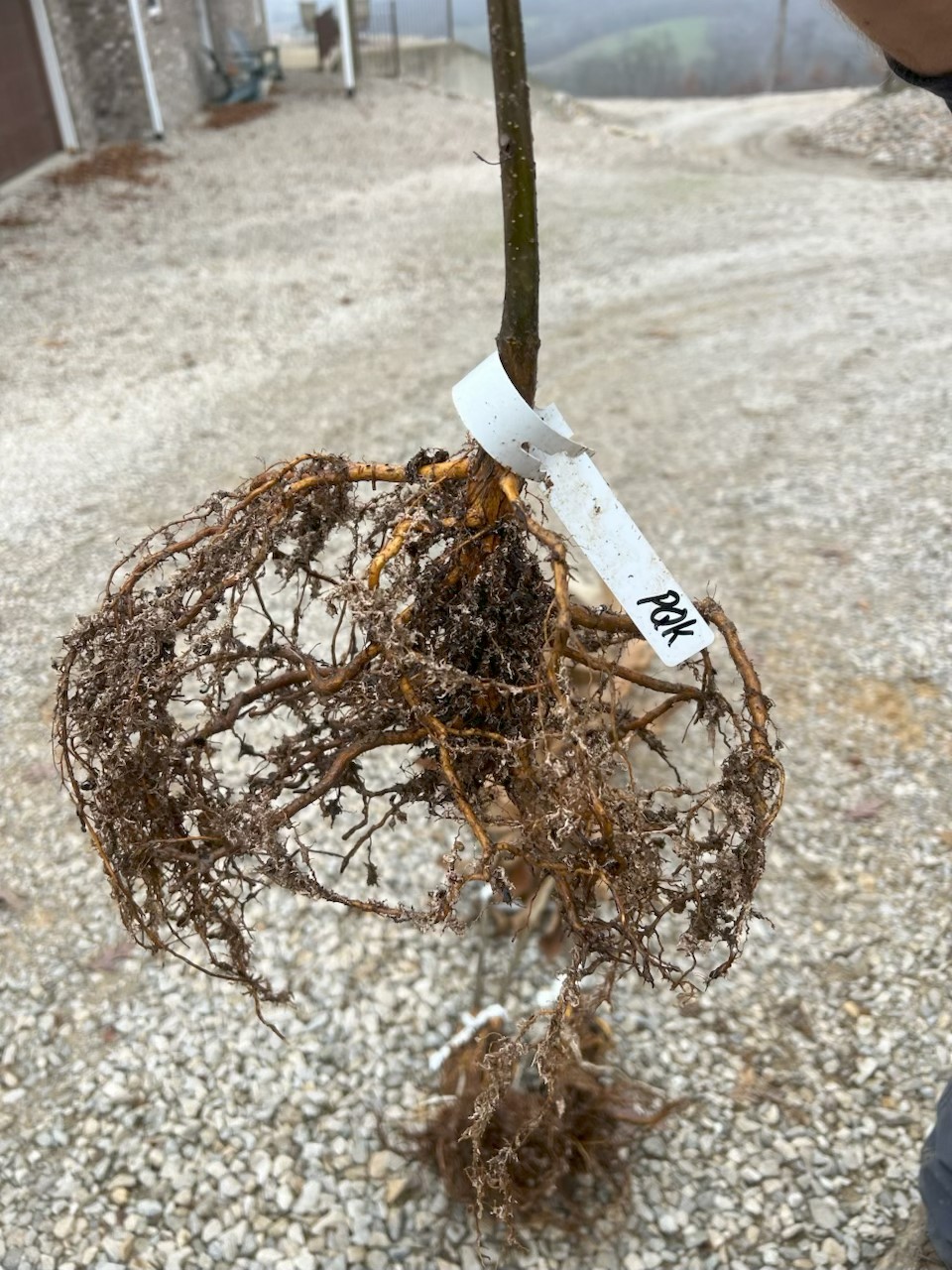
We are asked this question all the time: What’s best air-pruned chestnut seedlings or those grown in our nursery?
When you compare air-pruned vs nursery-grown chestnut seedlings, you are really comparing two different paths to the same destination. Both create strong, healthy chestnut trees. They simply take different approaches to root development and early growth, and that choice shapes your orchard timeline.
At EBB Farms, we didn’t start as a nursery. We began like most new growers: by purchasing chestnut seedlings from other suppliers. Some were fine, but many did not meet the standards we wanted for our own land. Roots were uneven. Trees were not hardened off. Some seedlings did not reflect the level of care we expect when planting a long-term crop.
So we made a decision.
We would grow our own trees—the way we believe chestnuts should be grown.
Today, through the United Chestnuts Partner Program, EBB Farms is a regional chestnut nursery serving hundreds of clients each year. Every tree we ship or load onto a trailer meets our own orchard standards: strong roots, hardy genetics, and careful handling from day one.
The photos in this post show exactly what that looks like.
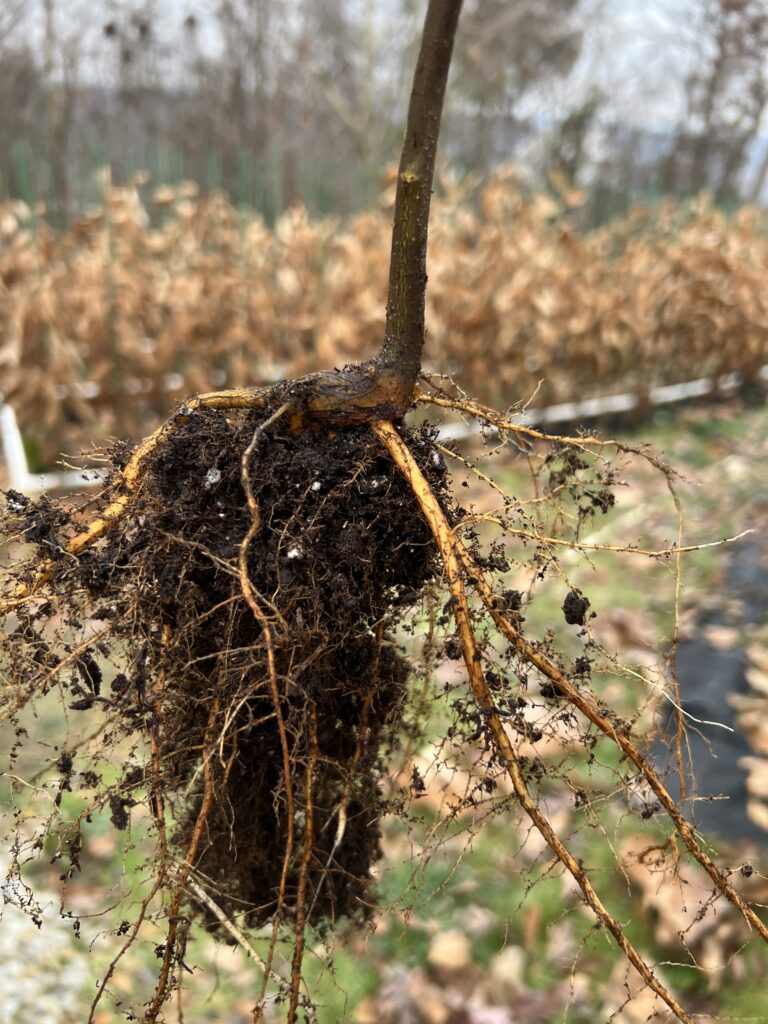
What Is an Air-Pruned Chestnut Seedling?
Air-pruned seedlings grow in special containers that allow root tips to meet air. When the root touches air, it naturally stops growing. This causes the seedling to create new lateral roots behind the tip.
This process prevents circling roots and builds a dense network of fine feeder roots. It also creates a compact root structure that is easy to plant and quick to adapt to new soil.
Key benefits
- Dense, fibrous root system
- No circling or J-roots
- Uniform root architecture
- Easy shipping and handling
- Less expensive
- High survival after transplanting
What to expect after planting
Air-pruned seedlings take a little longer to settle in. They must rebuild a taproot once planted. Growth in year one is steady and measured, not explosive. Over time, the fibrous roots create a strong foundation and excellent long-term tree health.
Air-pruned seedlings are ideal when root quality and consistency matter but primarily trading the investment costs for time.
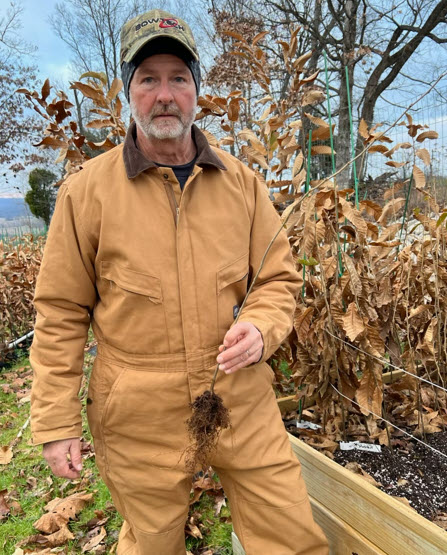
What Is an Grow Bag Nursery Grown Chestnut Seedling?
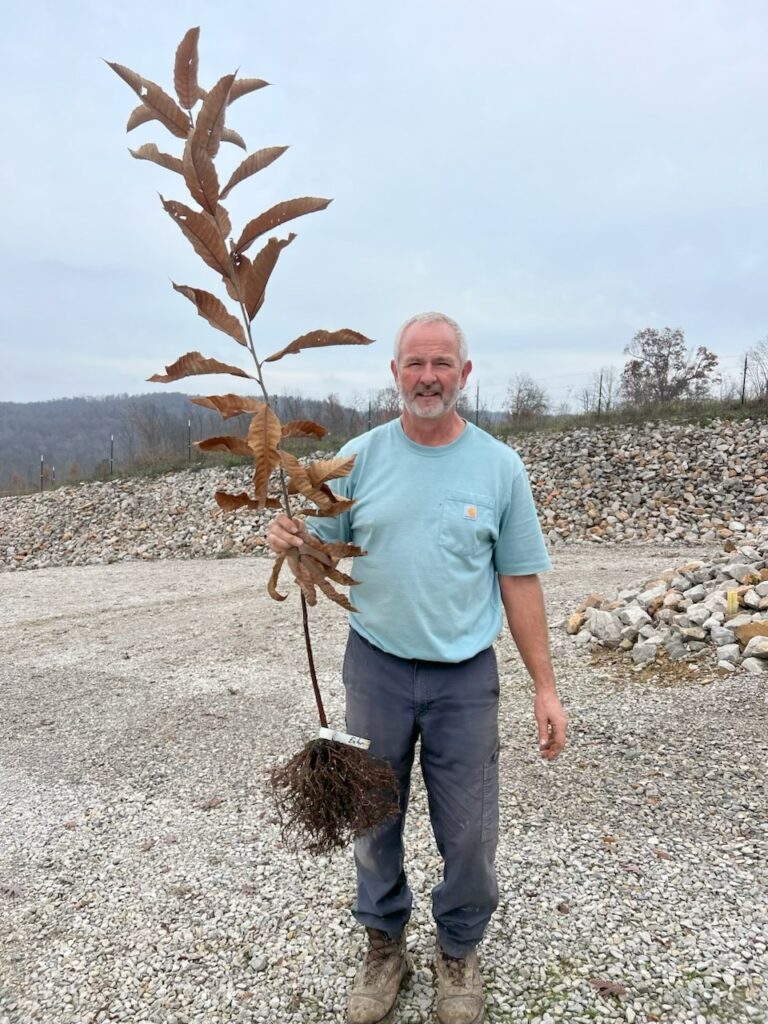
Orchard-grown seedlings mature in deep nursery beds or field rows. This gives them plenty of room to develop a natural taproot and larger structural roots.
You will notice immediate differences:
- An intact taproot
- Thick lateral roots
- More total root mass
- More height in year one
Key benefits
- Faster establishment
- Early height and canopy growth
- Strong anchoring in the first year
- Excellent option for orchard planting
What to expect after planting
Orchard-grown seedlings usually take off quickly. Their taproots are ready to dive deep, and they often gain noticeable height in the first growing season. Many growers choose this option when they want an orchard timeline that moves fast.
The Real Difference: Time vs. Money
Both seedlings become strong chestnut trees. The choice comes down to where you want the early work to happen: in our nursery or in your soil.
Air-Pruned Seedlings
You are paying for precision, uniformity and price.
Cost: Lower
First-year growth: Slower
Long-term performance: Excellent
Orchard-Grown Seedlings
You are paying for time already spent in the ground and a head start.
You are selecting a tree ready to leap in its first season.
Cost: Lower
First-year growth: Faster
Long-term performance: Excellent
Both reach the same destination. One just has a faster start.
Which Seedling Should You Choose?
At EBB Farms, we remind growers that there is no wrong choice—only the right choice for your goals.
Choose air-pruned if you want:
- Easy planting
- High survival in variable soils
- Long-term consistency
- Lower investment costs
Choose orchard-grown if you want:
- Faster early growth
- Quick canopy development
- Strong anchoring
- A head start toward production
You will receive the same quality genetics either way. We grow these seedlings for the same reason we farm chestnuts: because we love the long game.
A Final Note From the Farm
We grow the trees we wish we could have purchased when we started.
And now, through the United Chestnuts Partner Program, we are honored to help growers across the country plant their first acres and build their legacy.
Every tree we ship or load onto a trailer carries our name, our standards, and our belief in what chestnuts can become for America’s future. Visit unitedchestnuts.com/ebb-farms to order or preorder.
We’re grateful to help you grow. To learn more about having a chestnut orchard or hunting property, reach out. You may be interested in our Farm Tours.
— Brad Jones, EBB Farms
Falls of Rough, Kentucky