20 Dunstan Chestnut Seedlings (3’–4′) Preorder Fall 2026
$850.00
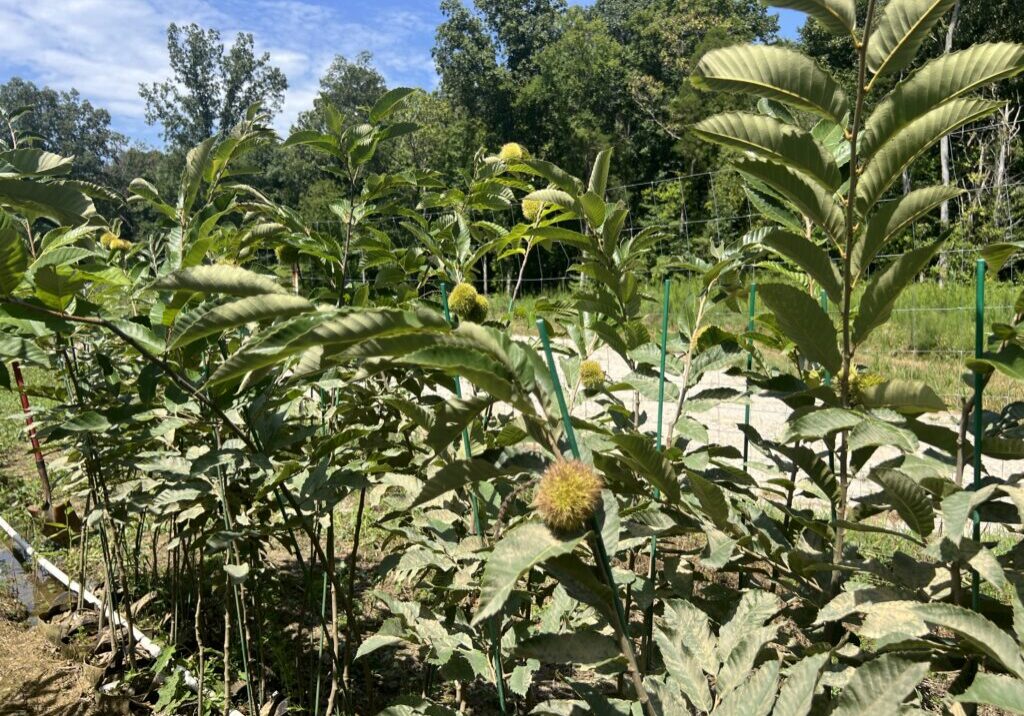
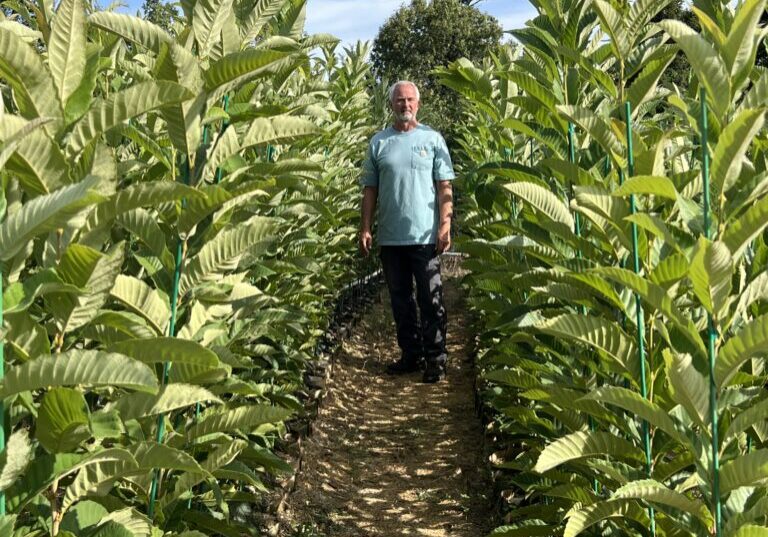
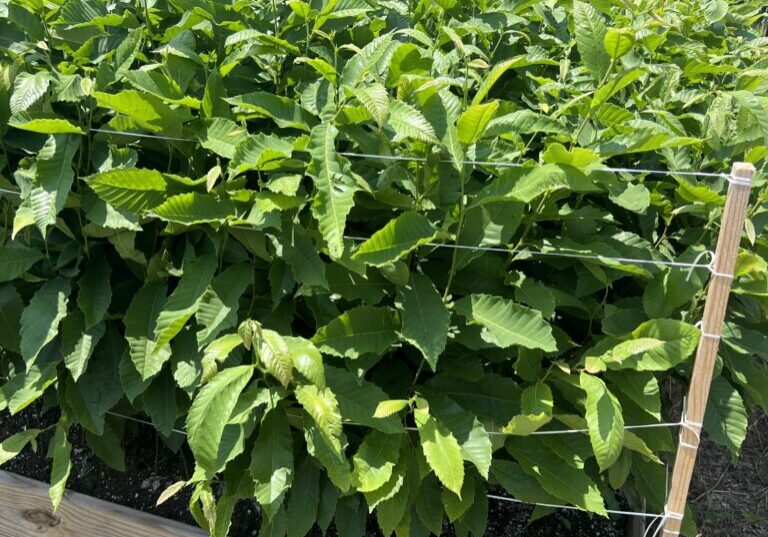
20 Dunstan chestnut seedlings (3’–4′) from EBB Farms in western Kentucky – the farm lab for United Chestnuts. This bundle is for growers who are ready to plant a real Dunstan block for wildlife, mast, and future nut income, using a blight‑resistant hybrid that can start bearing in just a few years.
About this product
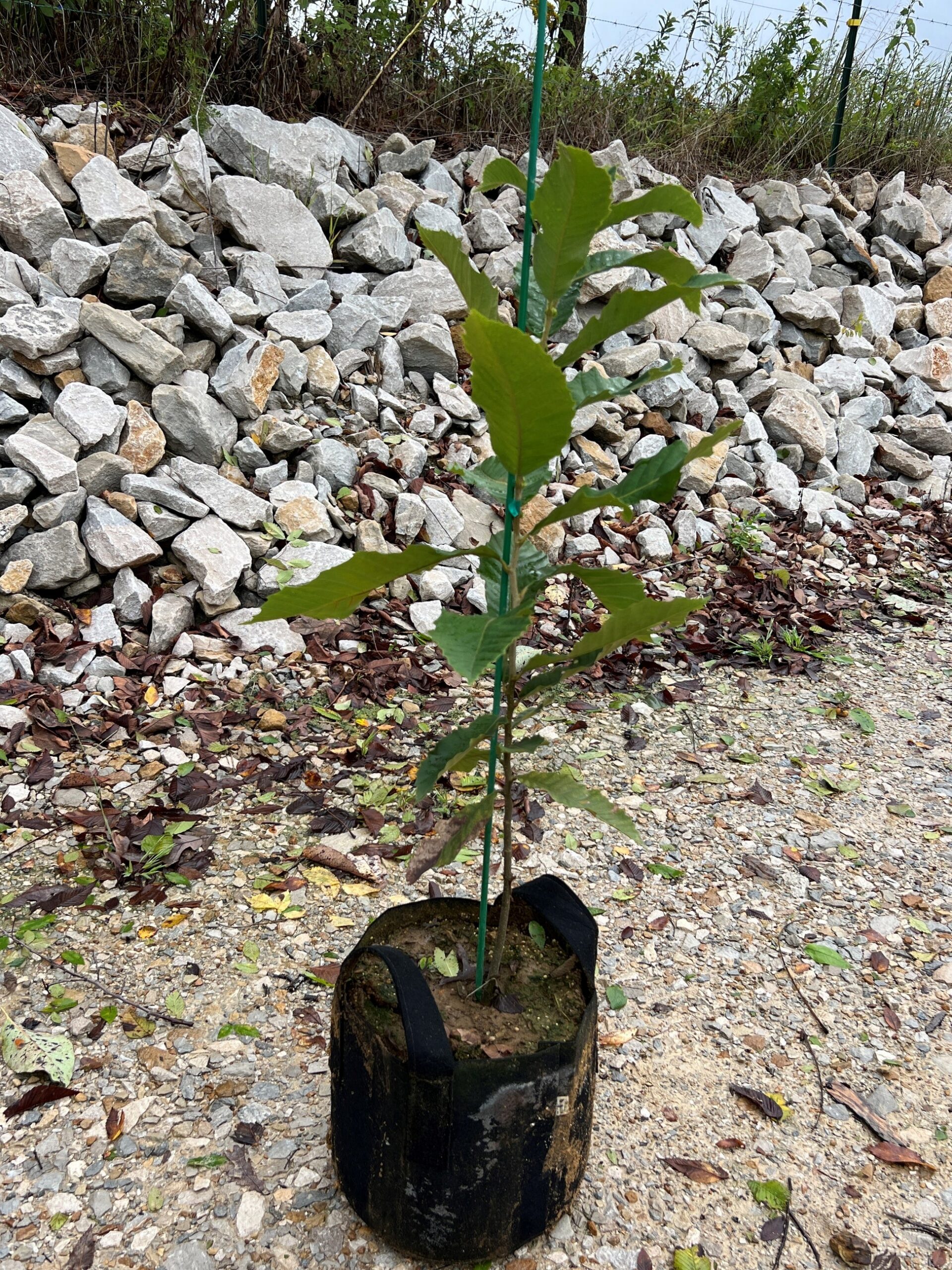
First, this product includes 20 Dunstan chestnut seedlings, each about 3’–4′ tall at shipping. We grow these seedlings at EBB Farms in western Kentucky – the farm lab for United Chestnuts.
Next, Dunstan chestnut seedlings come from crosses between American and Chinese chestnuts, bred by Dr. Robert Dunstan to combine American form and nut quality with Chinese‑type blight resistance. They are widely planted because they grow fast, show strong blight resistance compared to pure American, and can start producing nuts in roughly 3–5 years with good care, sometimes a bit longer in colder zones.
In addition, we raise these trees in quality nursery bags. Then we ship them at a size that feels like a real orchard tree. Because of this, this 20‑tree bundle works well for a full Dunstan row, a wildlife‑heavy block, or a mast‑focused strip inside a bigger planting.
Key details at a glance:
-
Type: Dunstan chestnut seedlings (American × Chinese hybrid)
-
Quantity: 20 trees per bundle
-
Height: ~3’–4′ at shipping
-
Root system: Bag‑grown, well‑developed roots
-
Use: Wildlife food plots, orchards, silvopasture lanes, homesteads, and habitat plantings
-
Audience: Growers who want 20 Dunstan chestnut seedlings to plant a real block for fast mast, wildlife draw, and future nut yield
Why 20 Dunstan chestnut seedlings?
Overall, 20 Dunstan chestnut seedlings are for when you’re ready to move from a test strip to a meaningful wildlife or orchard block.
-
Block‑size mast engine: With 20 trees, you can dedicate a full row or section to Dunstan and build toward thousands of pounds of chestnuts per acre at maturity under good management.
-
Faster returns than oaks: Under good conditions, Dunstan chestnuts can begin bearing nuts in as little as 3–5 years, compared to oaks that might take a decade or more to produce significant mast.
-
Proven wildlife draw: Dunstan is heavily used in food plots because it drops large, sweet nuts that deer and other wildlife key in on during the fall window.
-
Data you can trust: A 20‑tree bundle gives you enough trees to see how Dunstan responds to your soils, slopes, and management and to compare it directly to other cultivars in nearby rows.
If you want Dunstan to be a real contributor to your wildlife plan and nut income, not just a token tree, this 20‑tree bundle is the right scale.
EBB Farms – the farm lab for United Chestnuts
At EBB Farms, the farm lab for United Chestnuts, we run a working chestnut orchard in western Kentucky and treat Dunstan as one of our reference points for modern hybrid chestnut plantings. It’s a known quantity in wildlife and food plot circles, so we want hard data on how it stacks up alongside other cultivars in real farm systems.
We plant Dunstan chestnut seedlings into rows, wildlife alleys, and mixed agroforestry strips, track growth and mast, and then share what worked and what did not so other growers don’t have to guess. The same type of Dunstan seedlings going into our plantings are the trees you can order from this page.
Root systems and other options
These seedlings grow in nursery bags. This gives them sturdy, well‑developed root systems that handle planting stress and support the fast top growth Dunstan is known for.
If you want to design a more complex planting, you can also explore:
-
10 Dunstan chestnut seedlings (3’–4′) for a smaller starter strip or edge line
-
10‑ and 20‑tree bundles of UMCA PQK, Sleeping Giant, Miller, and other cultivars for side‑by‑side comparisons in adjacent rows
-
Larger, farm‑pickup Dunstan trees (3’–6′) if you want instant presence in showcase or educational plantings
Many landowners start with smaller Dunstan plantings, then step up to 20‑tree bundles when they see how quickly the trees grow, how wildlife use the mast, and how early the nuts start showing up.
Rooted in real‑world experience
At EBB Farms, we grow Dunstan chestnut seedlings the same way we plant for ourselves. We focus on root health, planting layout, weed control, and protection from deer and equipment so the trees can explode once they are established.
We know that planting 20 Dunstan trees is a real commitment of time and space. For that reason, we share what has gone well, what has failed loudly, and what we are learning about Dunstan blocks in both orchard‑style and wildlife‑heavy systems on our farm and in partner plantings.
Learn with us: tours, stories, and the podcast
The best way to understand how a 20‑tree Dunstan block behaves is to see or hear real examples over time.
You can visit EBB Farms for a farm tour. We walk through Dunstan rows and wildlife strips, show how they sit next to other cultivars, and talk through what we’re seeing in growth, mast, and wildlife response.
You can also listen to the Branching Out: Growing Together podcast and browse unitedchestnuts.com/resources for videos, articles, and updates as these Dunstan plantings mature.
Custom orders and collaboration
Do you want several 20‑tree bundles, or want to pair 20 Dunstan chestnut seedlings with 20 trees of another cultivar to build a comparison block? For custom orders, wholesale needs, or questions about your context, contact Melanie:
Email: [email protected]
Phone: 678.234.4894
We’re glad to help sketch layouts and pick a mix of Dunstan and other chestnut trees that matches your goals for wildlife, nuts, and long‑term resilience.
EBB Farms – the farm lab for United Chestnuts and learning and development hub for the chestnut community. Every Dunstan chestnut seedling you plant in a 20‑tree block helps generate real‑world data, wildlife food, and a more connected, future‑ready chestnut ecosystem.
Looking for more?