
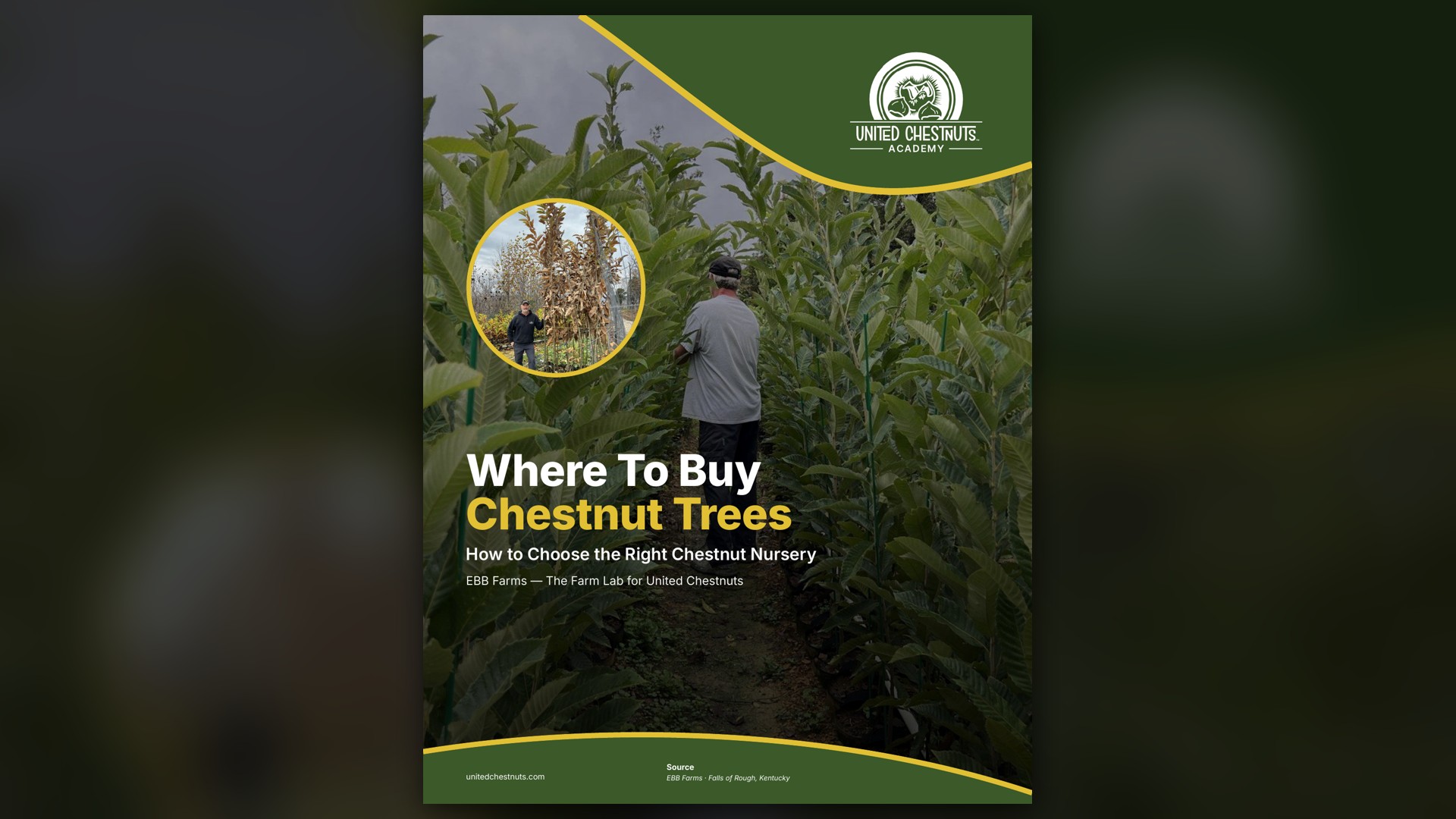
Where To Buy Chestnut Trees
$0.00
Twelve pages on choosing the right chestnut nursery before you buy. This chestnut nursery guide covers specialty nurseries by region, shipping versus farm pickup, UMCA® PQK seedlings, how to read roots and labels, and six questions to ask any nursery.
A chestnut tree you plant this year may still be bearing nuts decades from now. That’s why where it came from matters so much. This chestnut nursery guide helps you choose a nursery that grows chestnuts, knows its mother trees, and will still answer your questions after the sale.
It comes from EBB Farms in Falls of Rough, Kentucky, the farm lab for United Chestnuts. We grow thousands of chestnut seedlings in our nurseries each year, and these are the same questions we’d ask before buying a tree ourselves.
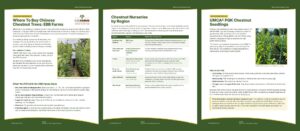
What’s Inside This Chestnut Nursery Guide
-
Why we recommend Chinese chestnut trees for most growers
-
What to expect from shipped seedlings and farm-pickup trees
-
Specialty chestnut nurseries by region, from Kentucky to Oregon
-
How to find growers near you with the Chestnut Growers of America directory
-
Why we recommend UMCA® PQK seedlings from the University of Missouri
-
How to check mother trees, labels, and roots
-
Six questions to ask before you buy
-
Where to buy fresh chestnuts to eat
Why Your Chestnut Nursery Matters
A general garden center may sell chestnuts beside maples and arborvitae, but chestnuts behave very differently. Species get mislabeled, and root systems vary widely. As a result, a tree can look fine on the lot and still struggle after planting. A specialty chestnut nursery knows the difference.
Find Chestnut Growers Near You
No single nursery fits every grower. That’s why the guide includes a regional nursery table and a walkthrough of the Chestnut Growers of America membership directory. Climate, cold hardiness, and suitability vary by region, and sometimes the best choice is a chestnut specialist closer to home.
More From the United Chestnuts Academy
Want the short version? Read our blog post on where to buy chestnut trees. Ready to plant? Browse our 4-foot chestnut tree seedlings, or shop the EBB Farms store. You’ll find more guides in the United Chestnuts Academy.
Download this chestnut nursery guide and buy your next trees with confidence.