September 6, 2024
Inside the Chestnut Breeding Program with Dr. Ron Revord
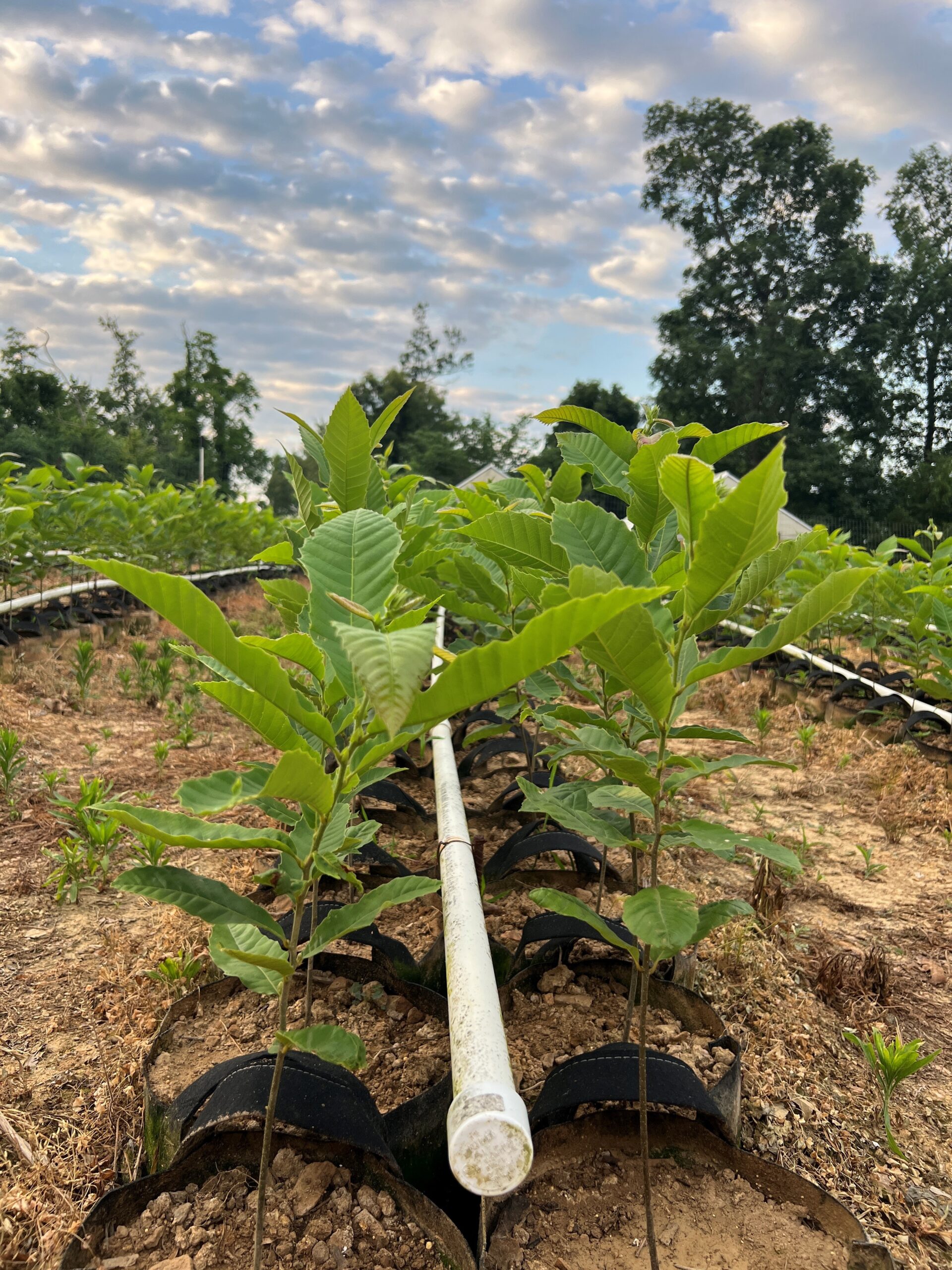
How do new chestnut cultivars get developed? What goes on behind the scenes in a tree nut breeding program? In this episode of Branching Out: Growing Together, Dr. Ron Revord, Assistant Research Professor and Lead Breeder of Tree Nuts at the University of Missouri Center for Agroforestry, breaks it all down. See more at here.

From greenhouse work to pollination sprints, Dr. Revord’s world is a careful balance of science, fieldwork, and vision for the future of chestnut production in the U.S.
🎧 Watch the full episode on YouTube
🧪 Breeding Chestnuts: A Mix of Precision and Purpose
Chestnut breeding is not just about planting and hoping for the best. Dr. Ron Revord walks us through the tree nut breeding program, which involves:
- Selecting germplasm with desirable traits
- Conducting complementary hybridization
- Evaluating progeny performance
- Using replicated evaluation trials
The goal? To release cultivars that outperform current options—whether in nut quality, yield, disease resistance, or climate adaptability.
“We’re looking for parents with complementary strengths,” Revord explains. “Each new release needs to be better in some way than what’s out there today.”
🌱 A Year in the Life of a Tree Nut Breeder
Ron’s schedule shifts with the seasons. In the spring, much of his time is spent in the greenhouse. During pollination and harvest, it’s all hands on deck.
Balancing computer work and field time is critical. While the physical side of the job—pruning, tagging, harvesting—requires grit and teamwork, the data side is just as important. Detailed observations, measurement consistency, and accurate record-keeping all feed into long-term breeding success.
🌰 Seedlings vs. Grafted Trees: Which One Wins?
During the podcast, Ron Revord and host Melanie Jones also explore a big topic for new growers: grafted trees vs. seedlings.
- Grafted trees often offer higher yields and consistent performance—but may require more precise management.
- Seedlings, on the other hand, can be hardier in challenging sites and may reduce up-front costs.
“There’s no one-size-fits-all,” says Ron. “It depends on your environment and your goals.”
🌿 Learn more about this ongoing research at the Chestnut Improvement Network.
🌎 Why Chestnut Diversity Matters
Another key message from Dr. Revord? There’s no “perfect” chestnut cultivar.
Instead, we need a diverse pool of genetics to suit different climates, soils, and farm goals. With climate variability increasing, this diversity will be critical for long-term resilience and productivity.
🔎 What New Growers Need
As interest in chestnut farming continues to grow, so does the demand for information. Ron shares that many aspiring growers are eager—but need guidance.
At United Chestnuts, we’re committed to helping fill that gap with:
- Educational resources
- Grower stories
- The Branching Out: Growing Together podcast
- High-quality chestnut trees for sale
💬 Ready to Learn More?
Subscribe to the Branching Out: Growing Together podcast on YouTube or wherever you listen to podcasts:
Join the United Chestnuts Community Facebook Group to connect with other growers, ask questions, and stay inspired.
🌰 Start Your Chestnut Journey
If you’re ready to explore chestnut farming, we’d love to hear from you.
📍 Visit unitedchestnuts.com to learn more
Let’s grow the future—one cultivar at a time.
R