One of the most common questions we hear from new growers is also one of the most important: where am I actually going to sell these? It’s asked by someone with a few acres in the ground, staring down a seven-year runway to first real harvest. It’s also asked by experienced growers who suddenly have more production than their current customers can absorb.
Selling chestnuts isn’t complicated, but it requires understanding something that most people miss at the start — chestnuts don’t fit neatly into any existing food category. They’re not vegetables. They’re not exactly nuts. They’re not a fruit or a grain, even though they share characteristics with all of those. The closest analogy, according to one of the most experienced handlers in the industry, might actually be a potato. Nobody thinks of it that way, but it’s not far off — a starchy, perishable, versatile food that needs careful handling and has a relatively brief fresh-market window.
Understanding that distinction changes everything about how you approach selling chestnuts.
The Two Main Channels — and Where You Probably Fit
The U.S. chestnut market today is roughly divided into two halves. About half of all chestnuts are sold direct-to-consumer — farmers markets, roadside stands, CSAs, u-pick operations, online direct sales. The other half flows through business-to-business channels: retail grocery, food service, and consumer packaged goods companies that use chestnuts as an ingredient.
For most independent growers, the direct-to-consumer channel is where selling chestnuts begins — and for many, it’s where the best margins live. Tom Wahl of Red Fern Farm in Iowa, one of the country’s longest-tenured chestnut growers, told us on the podcast that virtually 100% of his chestnut sales run through u-pick, and that it’s “by far the most profitable way to do it because it eliminates — or at least dramatically reduces — costs of harvesting and sorting.” When you bring customers to the orchard, you’re not paying for labor, cold storage, or packaging. The math is hard to argue with at a small scale.
However, as your production grows, direct-to-consumer starts to hit a ceiling. That’s when the B2B world becomes relevant — and that’s where the real work of market development is happening right now.
The Co-op Model: One Path to Scale
One of the most instructive examples of what market infrastructure looks like in practice comes from Roger Blackwell and Chestnut Growers Inc. (CGI) in Michigan. Roger described his operation to us as a true marketing cooperative — not just a loose association of growers, but a structure where members buy in, share equipment and facilities, and drop their chestnuts into a collective processing operation that handles everything downstream. “You drop your chestnuts into the processing operation and we take care of the rest,” he told us.
What struck me about Roger’s model is how it solves the problem that Scott Smith identified plainly in his own episode: “Most small independents, their fall down is that they don’t have a market. We all think we can grow something — we plant ten zucchini plants and then wonder what we’re going to do with all of them.” The co-op model removes that problem for individual growers. You grow. The co-op sells.
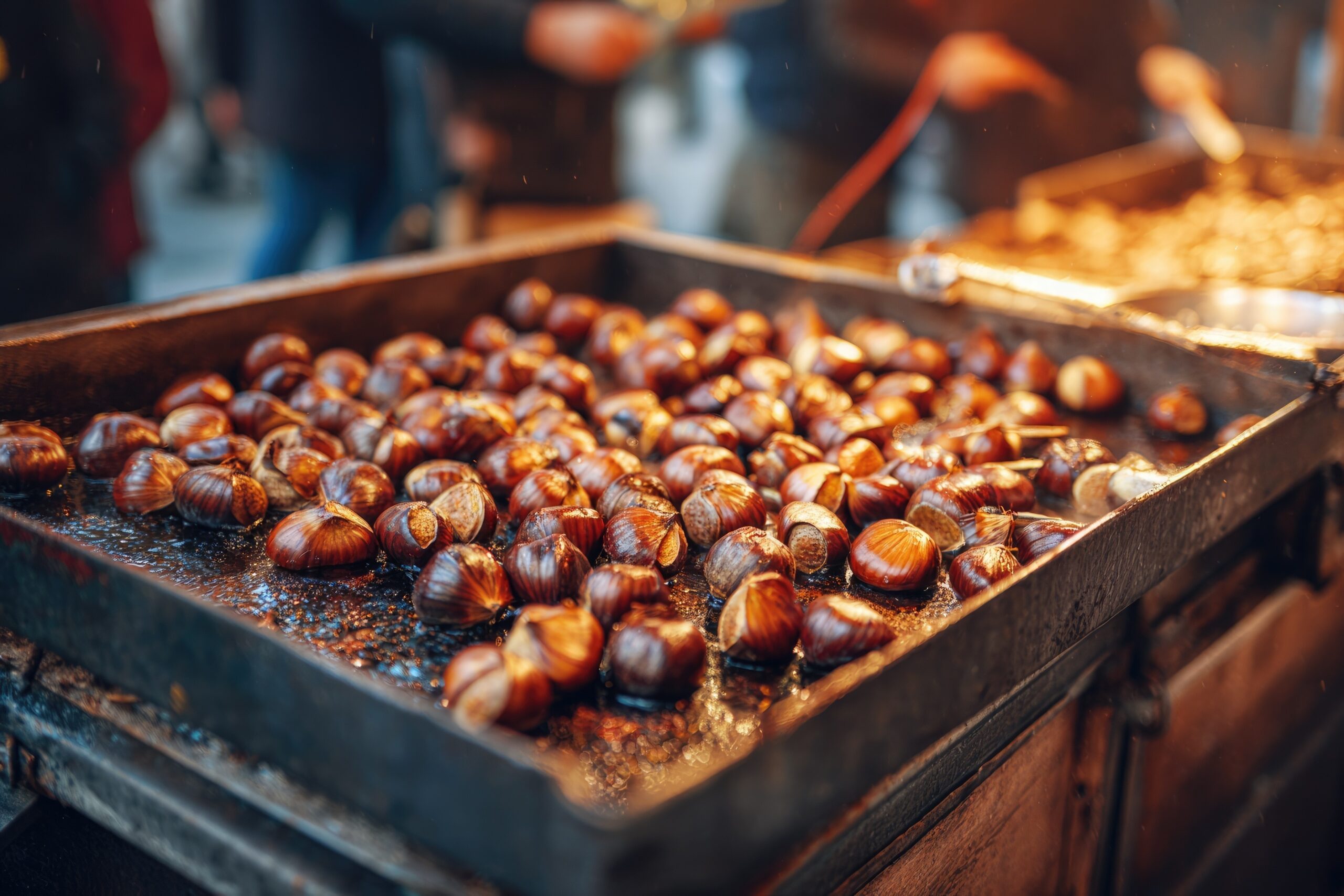
Furthermore, Roger has spent years working Eastern Market in downtown Detroit — the largest farmers market in the state — roasting chestnuts and educating customers. His observation? About every other person who walked by had never tasted a chestnut. That’s a market development challenge and an opportunity in the same breath.
The Food Service Opportunity Is Real
Here’s something that tends to surprise people: the most promising near-term gateway for expanding the chestnut market isn’t retail grocery. It’s high-end food service.
Chefs are willing to experiment. They’re willing to pay premium prices. They’re interested in co-developing the handling and preparation protocols that get chestnuts from your orchard to the plate in peak condition. And many are not intimidated by a food that requires a little more work than opening a bag of almonds.
Jon Nash of Treeborn and Nash Nurseries in Michigan has been living this reality. He told us that Treeborn started specifically because CGI was handling the fresh-market channel well, and the question became: what do we do with the chestnuts we can’t sell fresh? “The idea is that eventually we’re going to have more chestnuts than we can sell fresh market. We’re going to need to do something with it.” That thinking led to frozen peeled kernels, roasted chestnut chips, and eventually taking those chips to local Michigan breweries to develop a chestnut nut brown ale. It started, he told us, “over a beer.”
We’re starting to see this more broadly across the industry. Fresh-peeled, vacuum-packed, frozen chestnut kernels are being sold to chefs who cook with them whole or make them into puree. The key detail — and this matters if you’re ever working with frozen chestnuts — is that frozen fresh-peeled kernels need to go straight from frozen into boiling water. Thaw them slowly and they oxidize, turn black, and taste bitter. Drop them directly into boiling water and they hold their color and flavor beautifully. That’s the kind of specific, earned knowledge that opens doors in a professional kitchen and keeps a chef coming back.
Furthermore, food service buyers are far less concerned with cosmetic grading standards than retail buyers. A nut that’s perfectly good to eat but has a small visual defect won’t make it to a grocery shelf. It will absolutely make it into a chef’s chestnut soup.
Why Chestnuts Need Their Own Playbook
One of the biggest mistakes new growers make when thinking about selling chestnuts is trying to borrow the playbook from other crops. They look at how pistachios are sold, or how apples move through the supply chain, and try to apply the same logic.
It doesn’t quite work.
Chestnuts are perishable in ways that most tree nuts are not. They have a high moisture content. They don’t store like walnuts or almonds. They need refrigeration to stay fresh — but the cold chain matters less than most people assume. What matters more is handling discipline: getting them off the ground quickly, keeping them clean, and moving them to the right temperature promptly. A perfect cold chain doesn’t save a poorly-handled chestnut. Good orchard and post-harvest practices do.
Sandy Russell, who spent years managing global supply chains at a Fortune 50 retailer before becoming a chestnut grower herself at Chestnuts in the Ozarks, laid this out clearly in her episode. “The breaking point, really — it’s not the crop itself. It’s around the operations behind the crop.” She described what happens the moment a small producer tries to step into a retail or institutional buyer relationship: “The moment you move from a great product to a reliable supplier, the expectations change. They change overnight.” Buyers want, as she put it, “consistency, predictability, and the ability to deliver every single time without drama.”
That standard is achievable — but it requires building the operational discipline long before you’re knocking on a buyer’s door. Cooling speed, moisture control, grading, packaging consistency, and the ability to communicate reliable volume: these are what separate a grower from a supplier.
The Aggregation Trap — and How to Avoid It
As the industry grows and more growers look to pool production for institutional sales, one danger worth naming directly is what Sandy called “blind aggregation.” When growers come together to sell at scale before there are shared quality standards in place, one grower’s handling failure becomes everyone’s problem. “What killed early pistachio efforts,” she told us, “wasn’t scale. It was a lack of standards and a lack of visibility.”
Amy Miller of Route 9 Cooperative in Ohio understands this from the inside. She described the co-op she helps manage as an aggregation and marketing hub built specifically to create that visibility — to give individual Appalachian landowners a path to market that comes with standards baked in. “The idea is you know if this can be a processing and marketing hub for different types of specialty crop agriculture in the region,” she explained.
The lesson isn’t that aggregation is bad — it’s that aggregation works when everyone is operating to the same baseline. That work is happening right now across the industry, through organizations like Chestnut Growers of America and through gatherings like the new Chestnut Processors and Handlers meeting, where the people doing the real work share what they know.
Value-Added: The Logical Next Step
Selling raw, fresh chestnuts isn’t the only option. Greg Miller of Empire Chestnut Company and Route 9 Cooperative observed that consumer interest in chestnut products — not just whole nuts, but flour, dried kernels, chips, and ingredients — “seems to have occurred spontaneously” over recent years. “The interest in people wanting to create products… the whole market for chestnut products and chestnut trees is something I have no control over at all,” he told us, “and it has seemed to grow on its own.”
Chestnut flour is the most commonly pursued value-added product across the industry right now. It’s gluten-free, has a distinct and appealing flavor, and can be used in everything from pancake mixes to pasta. Treeborn’s chestnut chips represent another direction. Frozen peeled kernels for the food service channel are another. The landscape for value-added chestnut products is genuinely open.
For most independent growers, getting into value-added processing is a significant capital investment. However, it doesn’t have to be your investment. Regional aggregators and co-ops are building the processing infrastructure that will eventually allow smaller growers to deliver raw chestnuts and receive a processed-product split in return. We think that model is coming.
The Snippet: What You Need to Know About Selling Chestnuts
Selling chestnuts successfully means choosing the right channel for your scale. At small scale, direct-to-consumer — farmers markets, u-pick, and online sales — offers the best margins and the most control. As production grows, food service and B2B channels open up. In both cases, understanding that chestnuts are a unique, perishable product — not a commodity nut — is the foundation of a sound marketing strategy.
Start Building Relationships Before You Have Nuts to Sell
The growers who have the easiest time selling chestnuts are almost always the ones who started building buyer relationships years before their first commercial harvest. If you’re in year two or three of your orchard, now is the time to introduce yourself to local restaurants, specialty grocers, and food buyers in your area. Bring samples when you have them. Tell your story. Let people taste the product.
As Brett Hundley of Agroforestry Partners noted in a recent episode, large retail buyers have told him directly that they want to source domestically — they just haven’t been able to, because no one has been operating at the scale and reliability they require. That’s a gap that the entire industry, not just large operations, has a role in closing.
You’ll be amazed how many buyers are genuinely curious about domestic chestnuts — and have simply never had a grower show up and offer to supply them.