August 22, 2026
Grants for Chestnut Farmers: What’s Actually Open in 2026
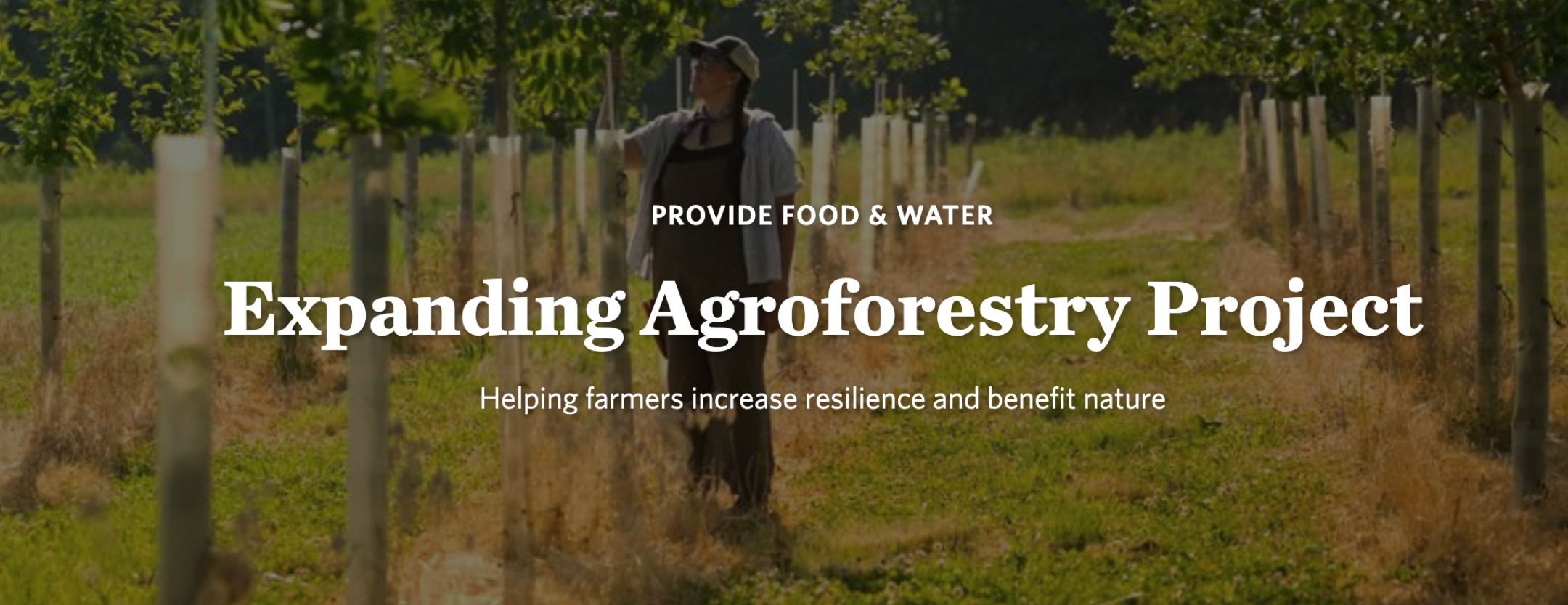
There’s a stretch of bare ground at EBB Farms that hasn’t grown anything yet. It’s the same stretch you probably have too. The back forty that’s been “next year’s project” for three years running. That empty ground is exactly what got us thinking hard about grants for chestnut farmers, and it’s worth walking through what’s real, what’s coming, and what to do about it right now.
This week, that thinking got more urgent. We received a direct update from the Expanding Agroforestry Project (EAP) team, the program at the center of the video, and it’s worth breaking down for every chestnut grower who’s been putting off an application or wondering if they should start one. If you want the longer conversation on this, we covered chestnut farming and USDA funding in depth on our podcast — worth a listen alongside this post.
Start Here: What Is the Expanding Agroforestry Project?
The Expanding Agroforestry Project is a $60 million effort led by The Nature Conservancy, funded through USDA’s Advancing Markets for Producers initiative. TNC is handling grant administration and cutting the checks, working alongside six regional partners including Propagate, Savanna Institute, Tuskegee University, the University of Missouri Center for Agroforestry, Virginia Tech, and the Hawai’i ‘Ulu Cooperative. The goal is tens of thousands of new agroforestry acres — alley cropping, silvopasture, and windbreaks — across 30 states plus Hawaii, Kentucky included.
Here’s the part that matters for your bank account: EAP is distributing $39 million directly to producers as incentive payments, not loans. If you’re accepted, the money moves in three installments — 70% once you sign your agreement with TNC, 25% after your planting is verified, and the final 5% after your last round of reporting. The project caps any one entity at $450,000 in total incentive payments through the award period, which runs through 2028. Minimum project size is 5 acres in most regions (3 in Hawaii), and there’s no maximum.
The email we got this week was a status update on Cycle 3, and it’s worth quoting directly because it’s honest in a way most funding notices aren’t:
“We have begun review of Cycle 3 applications. We expect to notify all applicants of our selection decision in October 2026… A selected application does not guarantee that a producer’s project will be funded.”
That last line is the one to sit with. Selection gets you into the Technical Assistance Phase, where you build your agroforestry plan and pull together documentation — a real project with a real technical assistance provider, at no cost to you. But the funding agreement itself doesn’t get finalized until that plan and paperwork are fully approved. Cycle 3’s application window closed August 11, 2026, so if you missed it, you’re not out of luck: TNC says they expect to open a Cycle 4 application period soon, and the smart move is to check nature.org/ExpandingAgroforestry now, not when the announcement drops.
Want more detail straight from the source? Jeremy Kaufmann of Propagate — one of EAP’s six regional partner organizations — will be rejoining us soon on the Branching Out: Growing Together podcast to talk through the program in depth. Keep an eye on the blog and we’ll link the episode here once it’s live.
The Catch: Why Agroforestry Grants Require Alley Cropping, Silvopasture, or Windbreaks
Here’s what the video walks through that most people miss when they hear “free money for trees”: EAP is agroforestry money, not orchard money. You can’t just plant a chestnut block and call it done. The program requires you to keep something else productive on that same ground — alley cropping, silvopasture, or a windbreak layout, with a second income stream running between or alongside the rows.
At EBB Farms, that means mixed grass hay in the alleys, cut and sold to neighboring farms. Other applicants in the program are running cattle through silvopasture, or interplanting with pawpaws. None of that is a workaround — it’s the actual design requirement, and it’s also the reason this money exists in the first place: TNC and USDA are trying to prove that trees and working land can produce income together, not compete for it. If you’re serious about grants for chestnut farmers, plan the alley crop or the livestock system before you plan the tree spacing, not after.
How to Get a Grant to Start or Grow a Chestnut Farm
EAP isn’t the only door open right now, and stacking is often the difference between a grant that covers your tree tubes and one that changes your planting timeline entirely. A few worth knowing:
USDA Specialty Crop Block Grant Program: What Chestnut Growers Should Know
Tree nuts, including chestnuts, are explicitly eligible specialty crops under this program, which every state department of agriculture runs on its own calendar. Kentucky’s 2026 pool through the Kentucky Department of Agriculture was $413,908, with preliminary proposals due in May and priorities around pest and disease control, specialty-crop research, and food safety — a good template for what your state program will likely prioritize next cycle. West Virginia’s version tops out at $100,000 per project on a two-year cycle. Check your own state department of agriculture’s site for the next window.
This one isn’t hypothetical for us, either: United Chestnuts was awarded a $20,000 USDA Specialty Crop Block Grant to build out educational materials for the United Chestnuts Academy, and we’ll be collaborating with Brent Arnoldussen, Extension Faculty in the University of Kentucky’s Department of Horticulture, on the curriculum. The same program funding your neighbor’s orchard research can fund a grower’s curriculum, too. If your project has an education or outreach angle, don’t leave that box unchecked on the application.
NRCS EQIP and CSP: Cost-Share for Chestnut and Agroforestry Practices
The Environmental Quality Incentives Program and Conservation Stewardship Program are the standing USDA cost-share tools for conservation practices — and alley cropping, silvopasture, and windbreaks are all recognized NRCS Conservation Practice Standards, the same standards EAP requires you to follow. Talk to your local NRCS office about layering EQIP cost-share on the pieces EAP doesn’t cover.
SARE Farmer/Rancher Grants
The Sustainable Agriculture Research and Education program funds on-farm research and demonstration projects, including past chestnut-specific work like operational grafting trials. If you’ve got a question worth testing on your own ground — a rootstock trial, a spacing experiment — this is the grant built for exactly that.
What to Do With Bare Ground Before Cycle 4 Opens
If you’ve got acreage sitting empty, here’s the actual to-do list, not the inspirational version:
- Document your land control. Ownership or a lease through 2028 is the baseline for EAP; most other programs want something similar.
- Sketch your alley crop or livestock plan now, before you touch a tree order — it’s the design requirement, not an afterthought.
- Book the free consultation. EAP offers a no-cost, hour-long call with a regional technical assistance provider before you ever fill out an application. Take it, even if Cycle 4 dates aren’t posted yet.
- Check your state department of agriculture’s Specialty Crop Block Grant calendar — Kentucky’s, and every other state’s, opens on its own annual schedule.
- Ask before you stack. Some federal and state funds can’t cover the same cost twice — confirm with each program before you count on combining them.
None of this is complicated, but it does take getting ahead of the paperwork instead of reacting to a closed application window.
How EBB Farms and United Chestnuts can help
Need trees for the ground you’re about to enroll? The EBB Farms nursery grows UMCA PQK, Eaton, Qing, Hiram, Sleeping Giant, Stehli Mix, Empire Elite, Dunstan, and more — browse what’s available. Want the full walkthrough on building an agroforestry plan and chasing grants like this one? The United Chestnut Academy keeps adding material built for exactly this. And if you’d rather just talk it through with another grower who’s already in the paperwork — call us. Honestly, that’s half of what we do.
One more thing worth knowing: Chestnut Growers of America, the national trade organization for commercial chestnut growers, is building out new member benefits right now, curated and delivered straight to members. If you grow chestnuts commercially, that membership is worth watching as it rolls out. We’d appreciate your support as we grow the U.S. chestnut community TOGETHER.
Subscribe to the United Chestnuts blog for the next update when Cycle 4 opens, and drop a comment if you’re already in the EAP pipeline — we want to hear how it’s going.