August 29, 2025
What We Can Learn from 1,000 Farms: A Conversation with Nora D’antuono of the Ecdysis Foundation
What Happens When Science Meets Soil
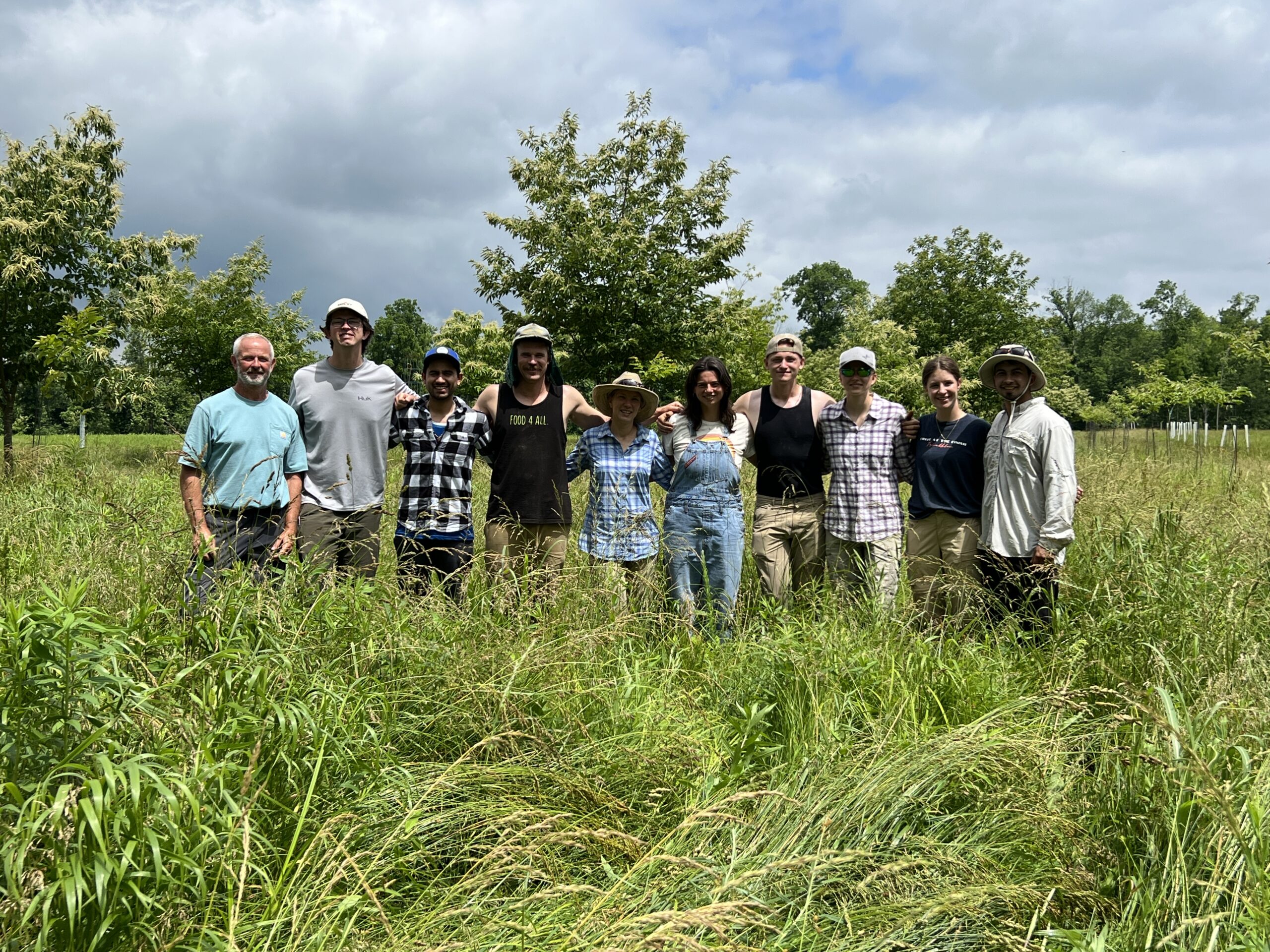
When the Ecdysis Foundation brought a team of researchers to EBB Farms, something special happened. It wasn’t just data collection — it was collaboration, conversation, and discovery.
In this episode of Branching Out: Growing Together, I sit down with Nora D’antuono, a member of the Ecdysis research team, to explore how science, storytelling, and chestnut trees are shaping a healthier food future.
“It all starts in the soil,” Nora explains — and during their visit, we dug deep into what’s living under the surface of our chestnut orchards and what it means for regenerative farming across the U.S.
Why Ecdysis Came to EBB Farms
The Ecdysis Foundation is leading a research project that stretches across the country. Their goal? Understand how different farming systems — from row crops to orchards — impact soil health, biodiversity, and communities.
Their stop at EBB Farms was their first time sampling a chestnut orchard.
Armed with microscopes, soil probes, bird recorders, and their AI-powered insect tool BugBox, Nora’s team captured more than just data — they gained insight into how perennial, low-input trees like chestnuts might play a critical role in future food systems.
Chestnuts: A Regenerative Powerhouse
Before visiting EBB Farms, only one member of the research team had ever eaten a chestnut — and even he wasn’t sure what it was called in English!
But once they toured the orchard, heard about our growing practices, and tasted chestnuts themselves, the lightbulbs went off.
“It’s perennial, high-yielding, low-input… why wouldn’t we grow chestnuts?” said Nora.
That’s exactly what we believe at United Chestnuts. When it comes to regenerating soil, sequestering carbon, feeding communities, and diversifying farm income — chestnuts check every box.
What Ecdysis Measures (and Why It Matters)
During their visit to EBB Farms, the Ecdysis team conducted full-scale sampling. That included:
- Soil health indicators
- Invertebrate and insect biodiversity (via BugBox)
- Bird abundance (via Xerinx, their bird-tracking software)
- Plant species richness
- Water infiltration rates
- Farmer interviews and management surveys
But what makes this organization unique isn’t just the tech — it’s the community. Every farm gets a customized report, and researchers are focused on building real relationships with the growers they visit.
“We’re not consultants,” Nora said. “We’re not here to tell you what to do. We’re here to listen — and to learn together.”
What They Discovered at EBB Farms
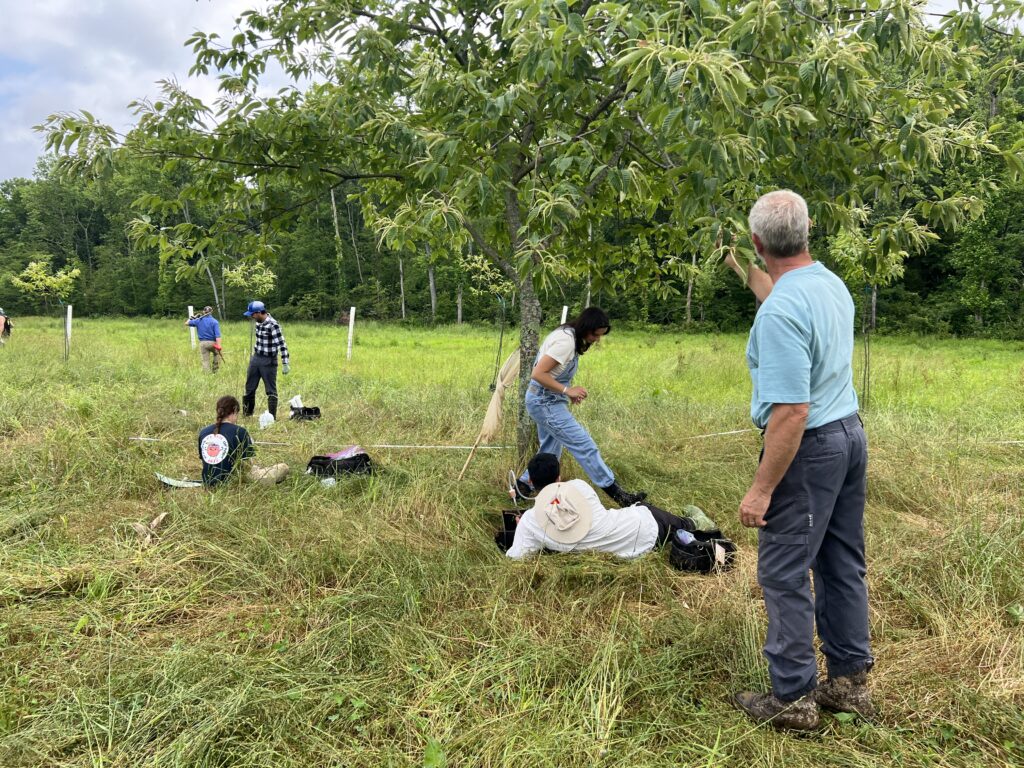
Our visit sparked new conversations about the role chestnut orchards might play in sustainable agriculture:
- Agroforestry potential: Chestnuts can be integrated into silvopasture systems.
- Biodiversity boost: Our orchard hosted high numbers of birds and insects.
- Soil health indicators: Early results show promise from our no-till, regenerative practices.
- Community connection: Shared meals and fieldwork built new bonds between science and land stewardship.
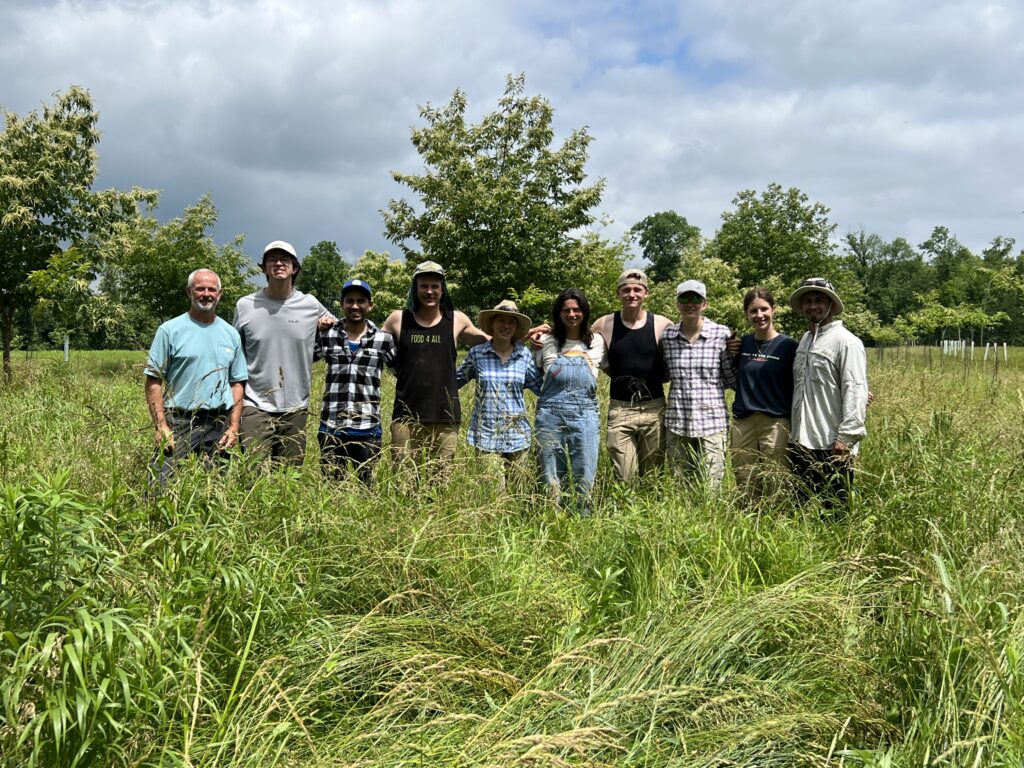
And while this was just one stop on a long journey, it sparked something deeper — a mutual understanding that regenerative change takes root one relationship at a time.
Two Projects to Watch: Ignite and Avalanche
Nora also shared two exciting expansions coming from the Ecdysis Foundation:
- Project Ignite – A focused continuation of their sampling work, highlighting promising systems like agroforestry and perennial crops (hello, chestnuts).
- Project Avalanche – A new approach that puts sampling tools into the hands of farmers themselves, allowing them to collect and submit their own data — and be part of the broader research network.
Both projects will expand the movement and give growers more ownership in the scientific process.
Final Thoughts: A Shared Mission
Whether you’re new to farming or decades in, there’s something powerful about this kind of collaboration. Scientists working with farmers. Data used to tell stories — not dictate outcomes. And chestnut orchards like ours showing what’s possible when tradition meets innovation.
🎧 Listen to the full episode of Branching Out: Growing Together to hear Nora’s perspective, learn about BugBox and Blue Dasher Farm, and discover how soil, bugs, and birds are reshaping the future of food.