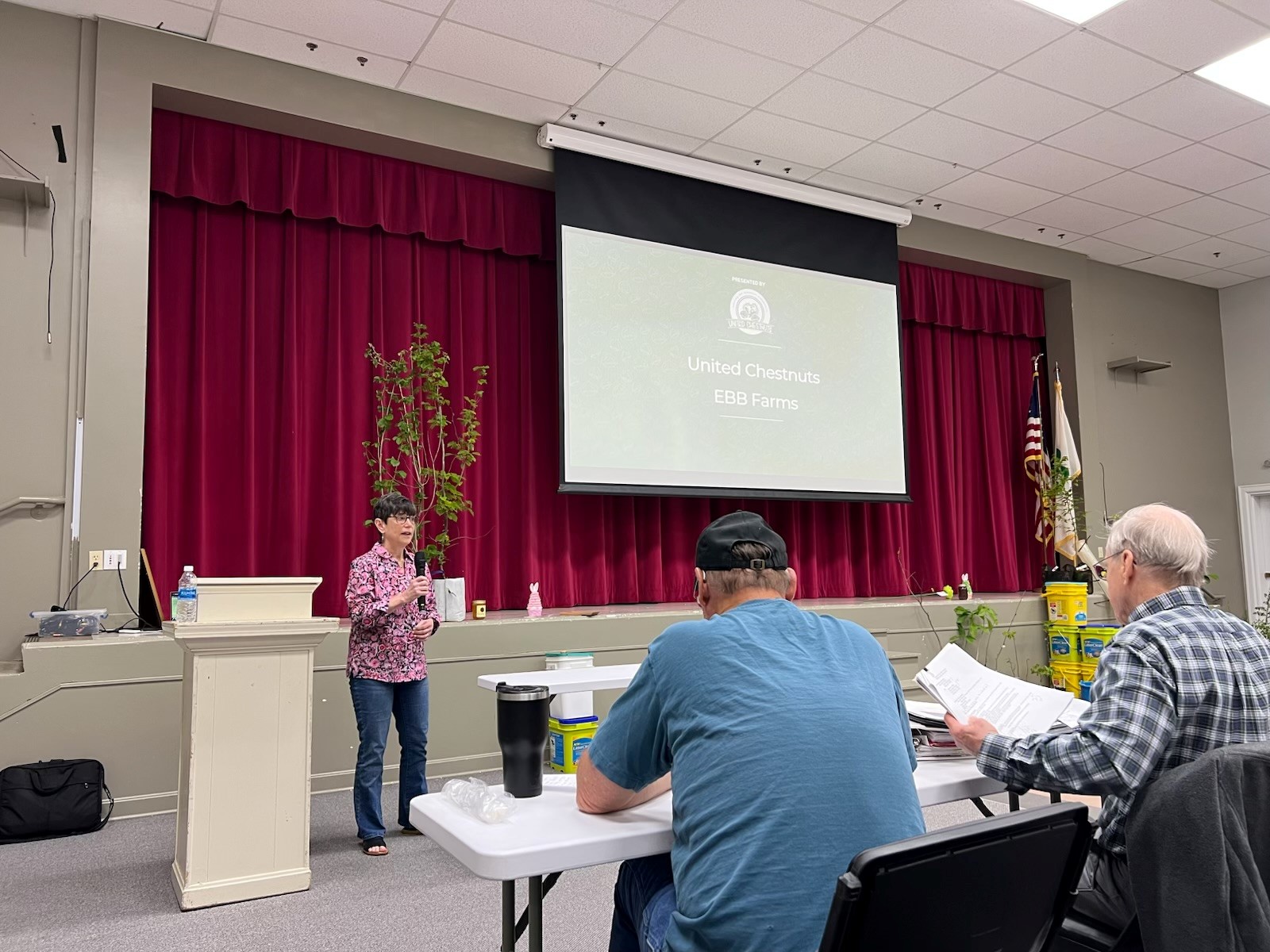
I’ve been invited to speak on a panel and the opening question focuses on the advantages of tree crops. It’s an exciting season for nut growers across the country. The 2025 joint conference of the Chestnut Growers of America and the Northern Nut Growers Association is just around the corner—August 3–6 in Lansing, Michigan.
During the panel session we will reflect on what are the advantages of tree crops, and in preparing my remarks, I realized this question opens the door to something much deeper: our why. Whether you’re thinking about planting your first trees or expanding an existing orchard, this post will help you reflect on the powerful reasons behind choosing tree crops—especially chestnuts—as part of your land, your lifestyle, and your legacy.
Start With Why
As Simon Sinek famously wrote, “People don’t buy what you do; they buy why you do it.”
— Simon Sinek, Start With Why
The same goes for planting trees. At EBB Farms, our working chestnut orchard and nursery powered by United Chestnuts, we always begin by asking new growers: What’s your why?
Before talking cultivars, zones, or soils, your reason for growing matters. Here are some of the most compelling whys we see—and why tree crops might be the most hopeful, radical thing you ever plant.
The Advantages of Tree Crops
🌳 1. Perennial Power
Unlike annuals, tree crops don’t need replanting every season. That means less tillage, fewer inputs, and more long-term rewards. Over time, this approach builds a more sustainable—and often less labor-intensive—system for growers.
🌎 2. Climate Action
Trees sequester carbon, making them an ally in our climate challenges. One acre of healthy, mature trees can absorb 2.5 to 6.5 tons of CO₂ each year—offsetting the emissions of 6,000 to 16,000 miles of car travel. Well this is definitely a reason to consider the advantage of tree crops.
🌱 3. Soil Builders
Trees reduce erosion, retain water, and rebuild tired soil. In Western Kentucky, we’ve seen firsthand how decades of conventional farming can degrade the land. Trees help reverse that.
💰 4. Land Value Boost
Tree crops increase the long-term value of your land—whether you’re restoring a degraded site or diversifying a working farm.
🌰 5. Orchard Dreams
From 3 acres to 300, orchards can be retirement projects, family enterprises, or weekend hobbies. They offer joy, income, and purpose.
Why Chestnuts?
As chestnut growers, our lens is focused on a nut that checks every box for agroforestry, soil regeneration, food production, and beauty. Advantage of tree crops is pretty exciting. Here’s why they’re especially compelling:
- Crop diversity: Chestnuts integrate beautifully with mushrooms, pastured livestock, and small fruits—an ideal anchor in agroforestry systems.
- Nutritional powerhouse: Chestnuts are gluten-free, high in fiber, and packed with complex carbs and vitamin C. They’ve been called the future replacement for corn—and that’s no small claim.
- Wildlife magnet: Deer, turkeys, squirrels, and more love chestnuts, making them perfect for hunting land and food plots.
- Beauty & sanctuary: Tree crops can transform land into a refuge—one that feeds the body, the soul, and future generations.
- Rediscovery of a lost food: Over 90% of chestnuts eaten in the U.S. are imported. We believe the next 20–30 years will change that.
Let’s Talk Numbers
Chestnuts aren’t just feel-good—they’re financially viable. According to veteran grower Tom Wahl:
- A well-managed 10-acre orchard can yield 3,500–4,000 pounds per acre
- At $2–$3 per pound wholesale, that’s $70,000–$120,000 gross
- At $7+ per pound retail, growers can gross $250,000+ per year
Even accounting for a 10–12 year ramp-up period, these numbers outpace traditional crops like corn and soy, which often bring in just a few hundred dollars per acre.
But Can You Sell Them?
That’s the big question. It’s why EBB Farms became our prototype farm—and why we launched United Chestnuts.
We created United Chestnuts to make chestnut farming visible, viable, and collaborative—nationwide. Our mission is to build the system that connects growers with markets and eaters with growers—while telling the stories that make this movement thrive.
Closing Thoughts: Plant Your Why
Planting a tree is one of the most radical, grounded, and hopeful things you can do. Whether your why is about food, wildlife, healing, income, or legacy—it matters. And the time to act is now.
If you’re curious about chestnuts, tree crops, or starting your own agroforestry system, visit unitedchestnuts.com or email me at [email protected]. And if you’re headed to the CGA/NNGA Conference in Lansing—please introduce yourself! I’d love to meet you.
Until then—let’s grow the future, one tree and one nut at a time.