January 7, 2026
How to Cook Chestnuts: Making Light, Healthy Dishes Feel Satisfying
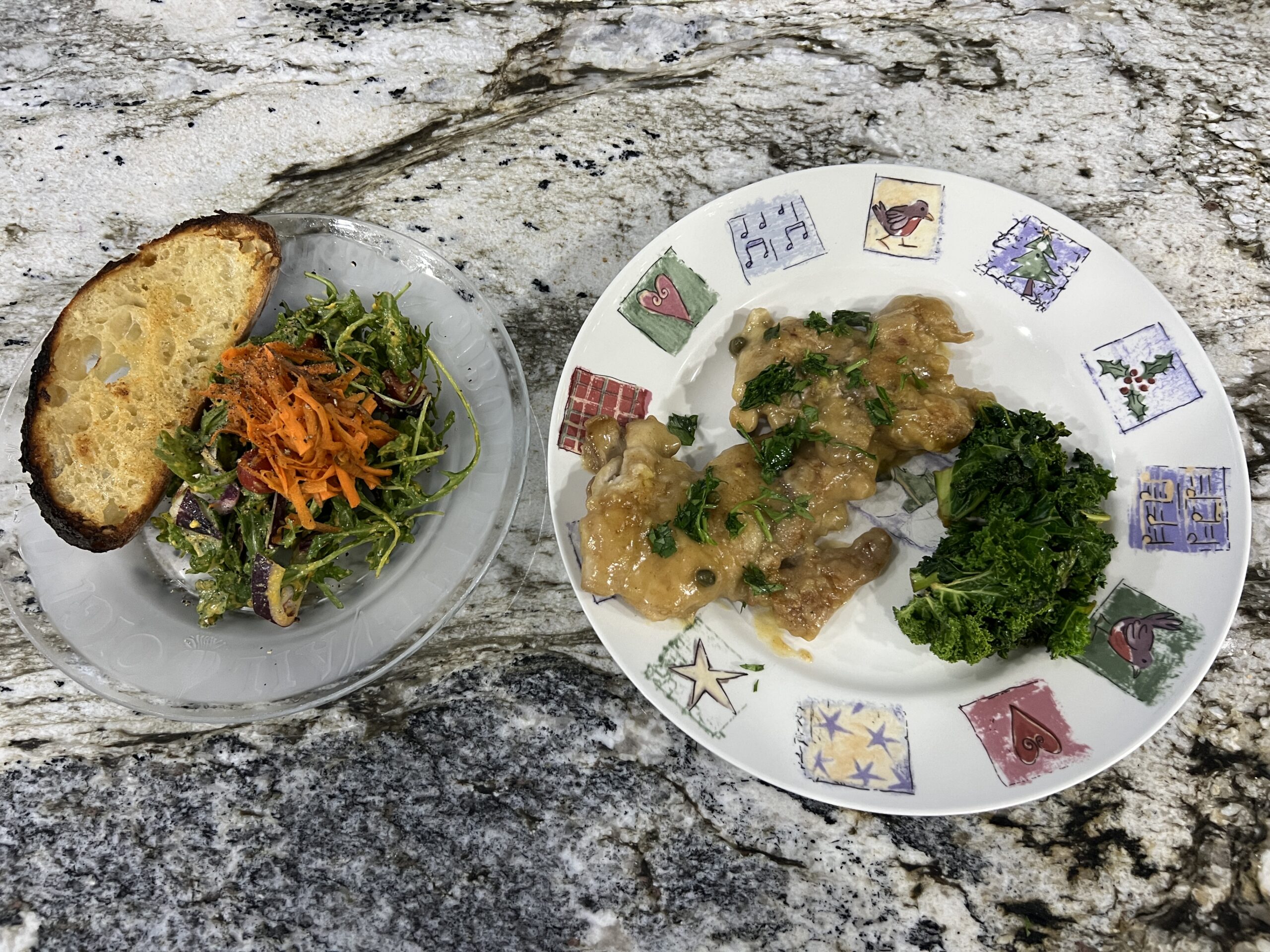
When our kids were growing up, one of their favorite week night dinners was what we simply called lemon chicken. I’d fry up cubes of chicken and make a quick sauce using store-bought lemon curd and a splash of sherry. It was bright, comforting, and always disappeared fast.
Years later, wanting to recreate that familiar flavor, lighten it up, and make it feel better to eat, I started experimenting with chestnuts. What surprised me most was how naturally they fit. Chestnuts softened the acidity, added body to the sauce, and replaced the need for heavy ingredients without sacrificing comfort.
The recipe below is the result. It’s bright, satisfying, and deeply nostalgic, but also far more balanced and nourishing than the version we loved years ago. It’s become one of those dishes that reminds me why chestnuts belong in everyday cooking, not just the holidays.
Remember, chestnuts don’t behave like other nuts. And that’s exactly why they deserve a place in everyday cooking.
At the United Chestnuts Test Kitchen, we start every recipe with the same question: How do you cook chestnuts in real life, beyond the holidays? Not as a novelty. Not as a once-a-year tradition. But as a practical, nourishing ingredient that actually makes meals better.
This guide focuses on one of chestnuts’ most overlooked superpowers: their ability to bring balance, body, and comfort to light, health-forward dishes without relying on cream, excess butter, or heavy thickeners.
Why Chestnuts Feel Different Than Other Nuts
Chestnuts are nutritionally unique. Unlike almonds, walnuts, or pecans, chestnuts are:
- Naturally low in fat
- Rich in complex carbohydrates for steady energy
- A source of fiber, potassium, and vitamin C
- Gentle on digestion and supportive of heart and joint health
Because of this makeup, chestnuts act more like a whole food starch than a typical nut. In cooking, that means they can thicken sauces, soften acidity, and add satisfaction without weighing a dish down.
That’s exactly why they work so well in bright, lemon-forward recipes like piccata.
How to Cook Chestnuts for Savory, Everyday Meals
Before we get to the recipe, let’s cover the basics. To use chestnuts in savory dishes, you want them fully cooked and peeled. You can:
- Roast fresh chestnuts and peel while warm
- Boil chestnuts until tender, then peel
- Use frozen cooked chestnuts (a great everyday option)
Once cooked, chestnuts can be:
- Chopped and sautéed for texture
- Blended into purées for sauces and soups
- Folded into grains, vegetables, or proteins
In this dish, we use chestnuts as a natural sauce enhancer. You can find chestnuts at a orchard near you, online or at www.unitedchestnuts.com.
Apple-Chestnut Lemon Chicken
A bright, comforting dish that balances acidity, healthy fats, and slow energy
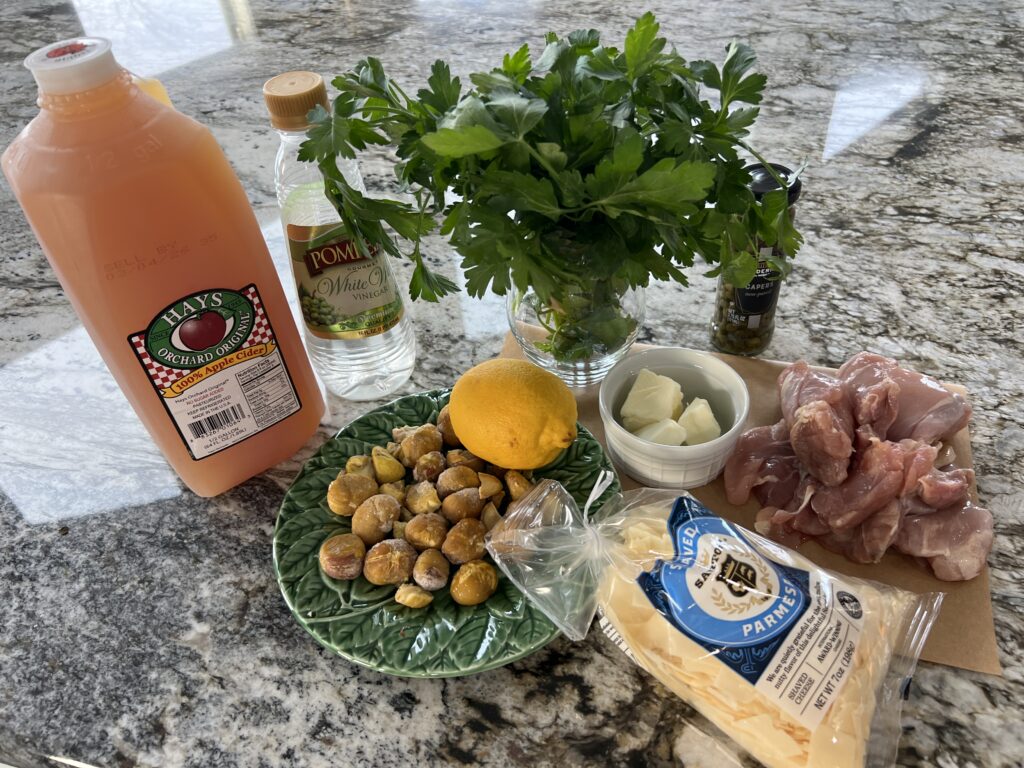
Ingredients (Serves 3–4)
Chicken
- 1½ lb boneless, skinless chicken breasts or thighs
- ¼ cup flour (or gluten-free alternative)
- 2 tbsp finely grated parmesan (optional)
- ½ tsp kosher salt
- ¼ tsp black pepper
- 2 tbsp olive oil
- 1 tbsp unsalted butter
Lemon-Apple-Chestnut Sauce
- ½ cup fresh apple cider (not vinegar)
- 1 tbsp white wine vinegar or champagne vinegar
- 2 tbsp fresh lemon juice
- ½ cup cooked chestnuts (I had some in the freezer)
- ¼ cup warm chicken broth
- 2 tbsp capers, drained
- 2 tbsp unsalted butter
- 1–2 tbsp chopped fresh parsley
Instructions
1. Prepare the Chicken
Pound chicken to an even thickness. Combine flour, parmesan, salt, and pepper. Lightly dredge chicken.
Heat olive oil and butter in a skillet over medium-high heat. Cook chicken until golden and just cooked through. Remove and set aside.
2. Make the Chestnut Purée
Blend cooked chestnuts with warm chicken broth until smooth and creamy. This purée will replace cream or excess butter while softening acidity.
3. Build the Sauce
In the same pan:
- Add apple cider and vinegar.
- Simmer until reduced by about half and lightly syrupy.
- Stir in lemon juice.
- Whisk in 2–3 tablespoons of chestnut purée until the sauce becomes glossy.
- Lower heat and gently swirl in butter.
The result should be bright but rounded, silky without heaviness.
4. Finish the Dish
Add capers and return chicken to the pan. Spoon sauce over the chicken to warm through. Finish with parsley.
Why This Dish Works (Test Kitchen Insight)
Chestnuts quietly do three jobs here:
- They buffer acidity from lemon and vinegar
- They thicken naturally without flour or cream
- They help the dish feel satisfying without feeling heavy
This is comfort food that behaves itself.
Serving Suggestions
- Sautéed kale, broccolini, or Swiss chard
- Creamy polenta or mashed cauliflower
- Simple olive-oil pasta with lemon zest
Health-Forward Cooking Takeaway
When you cook with chestnuts, you’re not just adding flavor. You’re changing how a meal feels after you eat it. Dishes stay bright, balanced, and comforting without relying on ingredients that can leave you sluggish or overfull.
That’s why chestnuts belong in everyday cooking.
From the United Chestnuts Test Kitchen
The United Chestnuts Test Kitchen exists to answer one simple question:
How do you cook chestnuts in real life, beyond the holidays?
This post is part of our ongoing How to Cook Chestnuts series, where we explore simple methods, smart pairings, and modern dishes that help chestnuts feel at home in today’s kitchen.