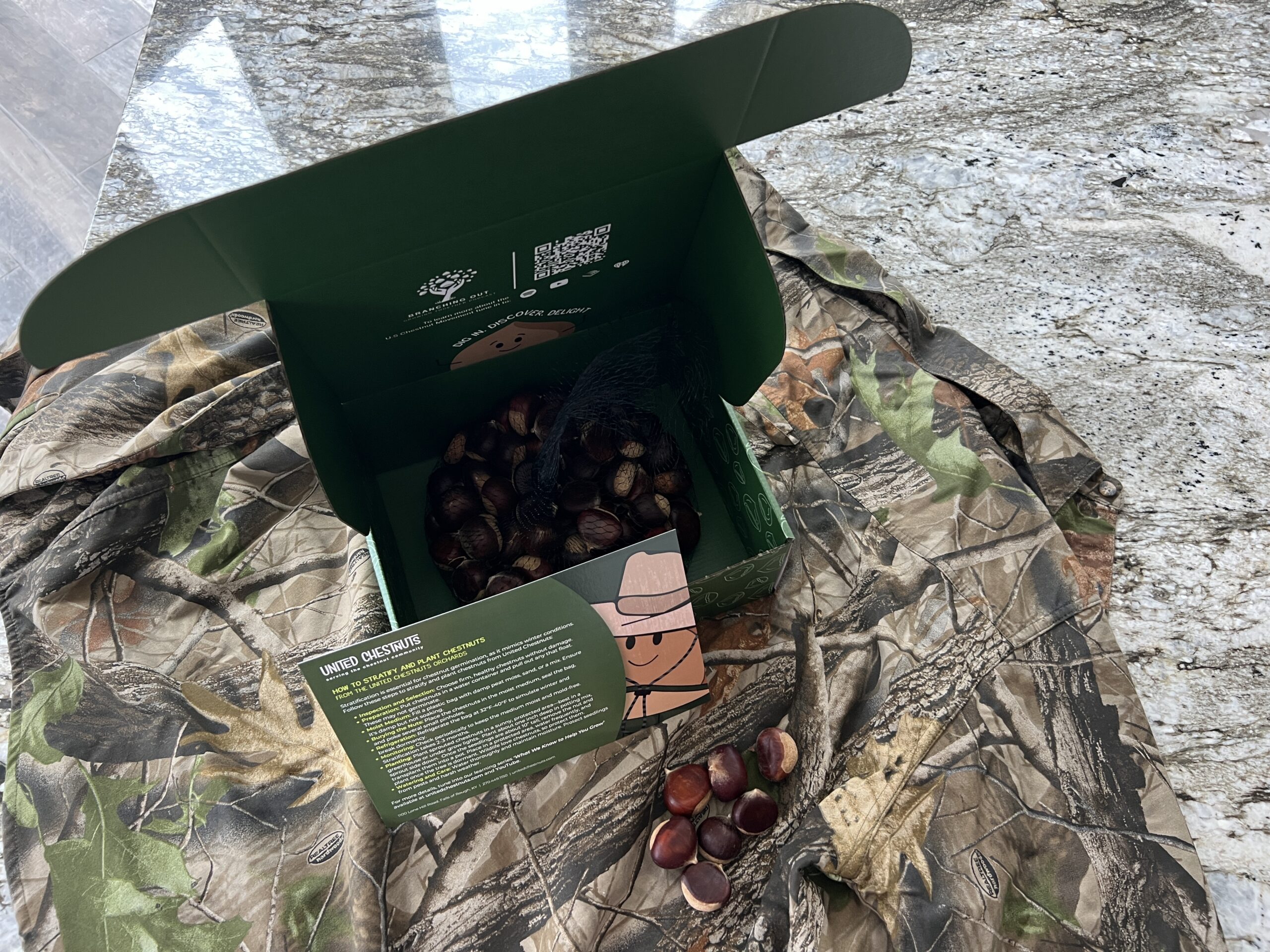
Looking to improve your hunting property and attract more game? Planting chestnut trees in food plots is a powerful way to offer nutrient-dense forage while also supporting sustainable land management.
At EBB Farms, we believe the right trees can transform your land—making it more productive, biodiverse, and profitable for years to come.
Why Chestnut Trees?
For generations, American chestnuts provided abundant food for wildlife across the country. Although chestnut blight nearly wiped them out in the early 20th century, blight-resistant hybrid chestnuts are now making a strong comeback.
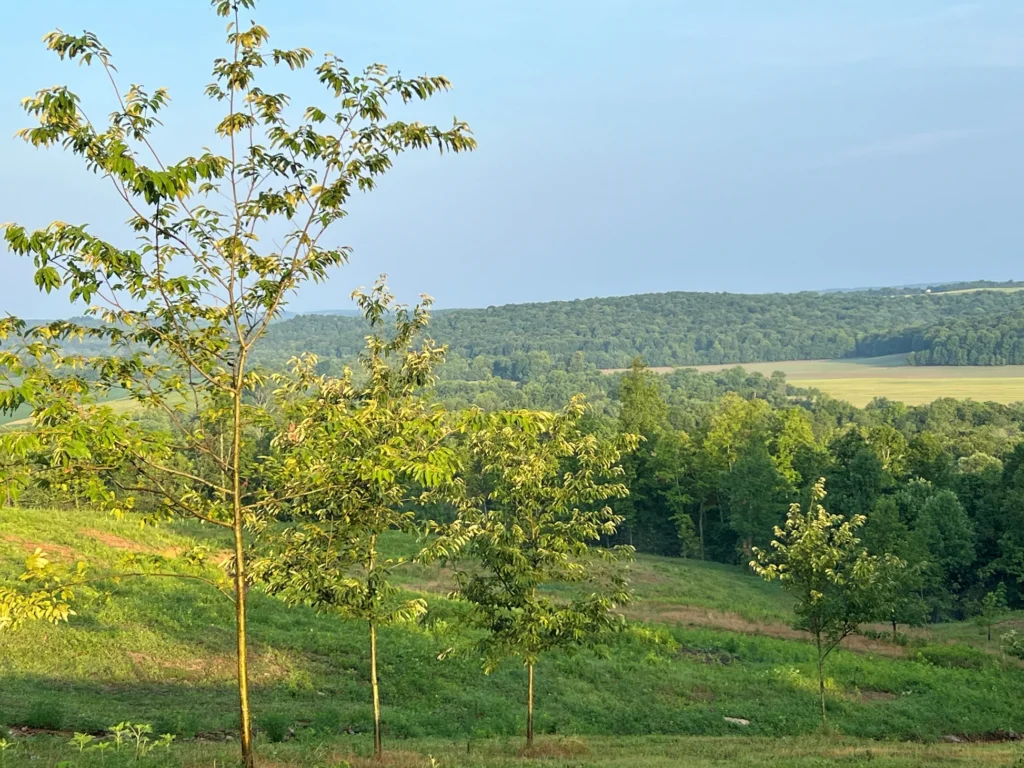
Here’s why chestnut trees in food plots are a total game-changer:
1. High Nutritional Value for Wildlife
Chestnuts are rich in carbohydrates and low in tannins, making them highly digestible for deer, wild turkeys, squirrels, and other game. Compared to acorns, chestnuts provide a more palatable and energy-dense food source—especially important during the fall rut and pre-winter months.
2. Reliable Annual Crop
Unlike oaks, which can skip acorn production in off years, chestnut trees produce nuts annually once mature. That means a consistent attraction for game animals every season. Plus, most chestnut varieties drop their nuts in early fall—just in time for hunting season.
3. Long-Term Investment
Planting chestnut trees in food plots is not just a short-term strategy. These trees can live and produce for decades, giving you a legacy crop that benefits future generations. Once established, they require minimal care and continue to deliver reliable returns—in wildlife, soil health, and property value.
How to Add Chestnut Trees to Your Food Plot
✅ 1. Pick the Right Location
Chestnuts prefer well-drained, sunny areas. Avoid low-lying or poorly drained spots. Plant trees 30–40 feet apart to allow for mature canopy spread.
🌱 2. Mix With Annuals and Perennials
Combine chestnuts with clover, brassicas, or cereal grains to create a multi-season food plot. These fast-growing forages feed wildlife while your chestnuts establish.
🛡 3. Protect Young Trees
Deer love chestnut saplings. Use tree shelters or fencing during the first 5–7 years to protect your investment.
🧑🌾 4. Commit to Early Care
Water regularly, mulch to retain moisture, and monitor for pests. A little early attention goes a long way in ensuring your chestnuts become a low-maintenance, high-reward addition to your land.
More Than Just Deer
Chestnuts don’t just attract deer. You’ll also see wild turkeys, squirrels, and even black bears frequent your plot. If you’re hoping for diverse game and a thriving ecosystem, chestnuts are the natural choice.
A Sustainable Land Management Tool
Planting chestnut trees isn’t only about hunting—it’s about stewardship. By restoring this historically important tree to your landscape, you’re actively contributing to regenerative and sustainable land practices.
Ready to Plant?
At EBB Farms, we offer:
- Blight-resistant hybrid chestnut seedlings
- Chestnut seed nuts
- A Hunter’s Box special, perfect for food plot starters
- Sawtooth oaks and other wildlife-friendly trees
- Pickup in Falls of Rough KY or we ship nationwide.
🌰 Shop now or contact us for recommendations based on your soil, region, and goals.
You might be interested in this blog: https://unitedchestnuts.com/chestnuts-and-oak-trees-for-wildlife/