October 21, 2026
Where To Buy Chestnut Trees?
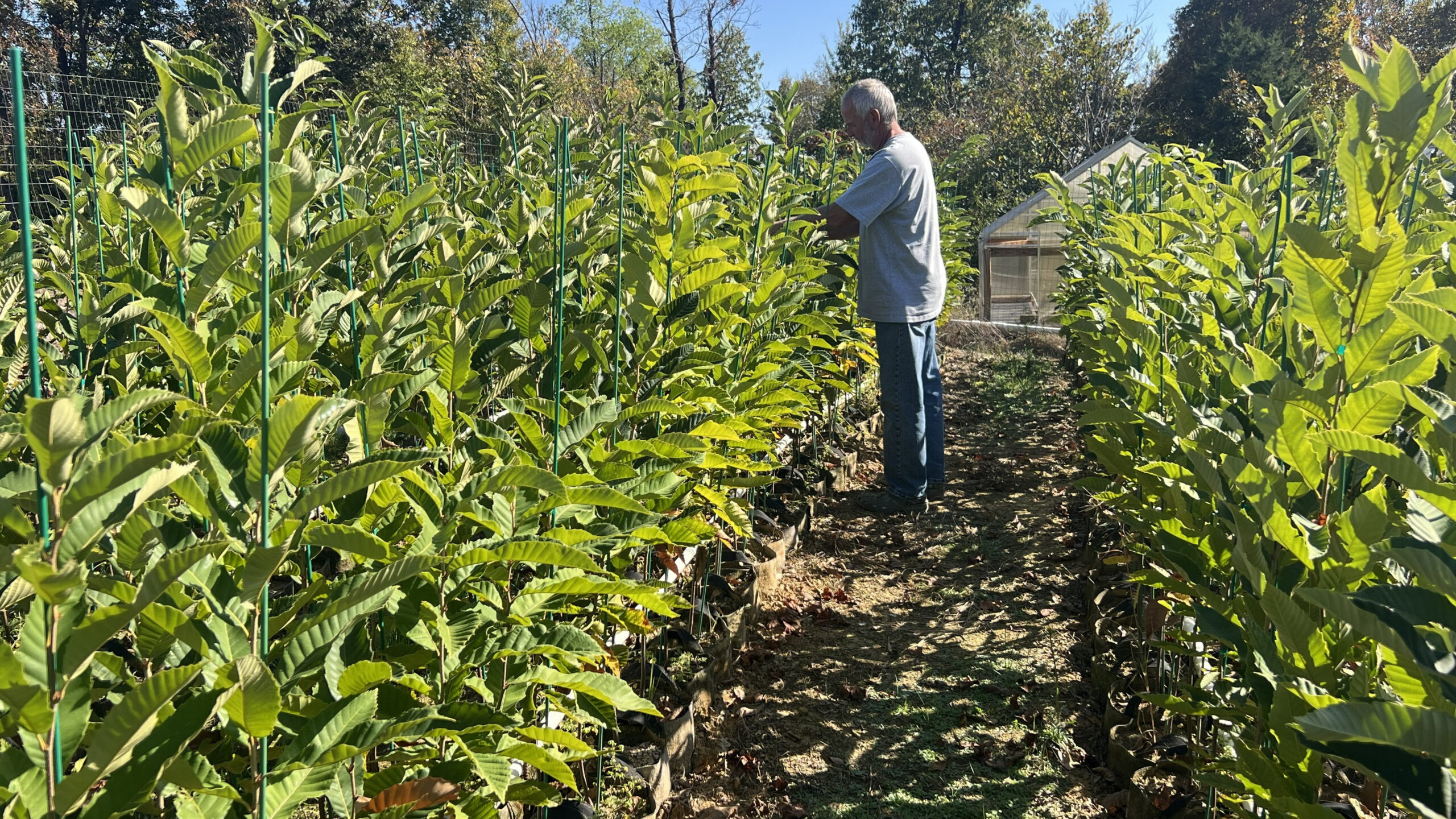
The best place to buy chestnut trees is a specialty chestnut nursery run by people who grow chestnuts themselves, not a general garden center. For Chinese chestnut seedlings in the Southeast and Midwest, EBB Farms in Kentucky grows and ships trees to many states. To find chestnut growers and nurseries in your own region, start with the Chestnut Growers of America membership directory or the suggestions below.
“Where can I buy chestnut trees?”
is one of the first questions we hear on farm tours here at EBB Farms, and it’s one of the most important. A chestnut tree is a long-term decision. The seedling you plant this year may still be producing nuts decades from now, so where that seedling came from matters more than most new growers realize.
This post covers where to buy chestnut trees, with a focus on Chinese chestnuts (Castanea mollissima), the species we grow and know best. You’ll find what we offer at EBB Farms, other specialty chestnut nurseries by region, how to find chestnut trees near you, answers about Dunstan and blight-resistant American chestnut trees, and where to buy chestnuts to eat.
Where To Buy Chestnut Trees? Start With a Specialty Nursery
Download the free guide from the United Chestnuts Academy here.
A general nursery isn’t nearly as qualified to grow chestnut seedlings as someone who’s in the chestnut business. Chestnuts may be sold beside maples and arborvitae at a garden center, but they behave very differently. When you’re deciding where to buy chestnut trees, look for a nursery that:
- Grows chestnuts in its own orchards
- Knows the mother trees behind its seedlings
- Labels species correctly (Chinese, American, European, Japanese, chinkapin, and hybrids aren’t interchangeable)
- Grows roots for transplanting, such as in air-pruning beds or grow bags
- Will still answer your questions after the sale
Why We Recommend Chinese Chestnut Trees
Chinese chestnuts have become the backbone of chestnut orchards across much of the eastern and central United States. University of Missouri Extension’s Growing and Marketing Chinese Chestnuts says Chinese chestnut is best adapted for Missouri and the surrounding states. It cautions growers to buy Chinese chestnuts rather than European or Japanese types, which may not be cold hardy there, may get blight, and often produce nuts with internal rot.
The same guide recommends planting a diverse variety of families in seedling orchards. That’s how we approach our own nursery, growing seedlings from proven parents such as UMCA® PQK, Eaton, Qing, Sleeping Giant, Dunstan, Empire Elite, Stehli Mix and more.
Where To Buy Chinese Chestnut Trees: EBB Farms
EBB Farms is our hands-on chestnut orchard in the rolling hills of Kentucky and the farm lab for United Chestnuts. It started in 2017 as an experiment with Chinese hybrid chestnuts. Today it’s a working farm with more than 2,500 chestnut trees established, and we grow thousands of chestnut seedlings in our nurseries each year.
Our nursery is led by nurseryman Brad Jones, who manages chestnut production from greenhouse to nursery to planting. Our varieties include UMCA® PQK, Eaton, Qing, Hiram, Empire Elite, Sleeping Giant, Stehli Mix, Miller, Amy, Dunstan, Gideon, and our own EBB Superstar.
What you’ll find in the EBB Farms store:
- Mix-and-match seedling bundles. Build your own tree bundles. Call us at 678.234.4894 for custom large orders.
- Air-pruned and grow-bag seedlings. Grown in air-pruning beds and 3-gallon grow bags for a fibrous, well-branched root system.
- Larger farm-pickup trees. Trees up to 10 feet tall are available for pickup at the farm.
- Seed nuts for growers and nurseries.
- Planting support. A chestnut tree planting guide, tree tubes and stakes, and farm tours with a chestnut farm blueprint.
Every order includes a free coupon for a digital download from the United Chestnuts Academy.
Chestnut Trees Shipped to Your Door
We ship thousands of chestnut seedlings to growers in many states. Every order is packed by hand at the farm so the seedlings arrive ready to plant. Our seedlings grow through the same hot summers and up-and-down winters that growers in the Southeast and Midwest deal with every year. Whether you’re in Tennessee, the Carolinas, Georgia, Alabama, Virginia, Indiana, Illinois, or right here in Kentucky, we’re happy to help you choose varieties for your region.
What Your Chestnut Trees Look Like When They Arrive
Many first-time buyers aren’t sure what to expect when they order chestnut trees online, so here’s what shows up at your door. Our shipped seedlings are dormant and bareroot, with a few or no leaves. That’s normal, and it’s the best time to move a tree. We trim and ship at about four feet tall, packed by hand at the farm.
The part that matters most is underground. Look at the roots. A healthy chestnut seedling should have a full, fibrous root system with lots of fine feeder roots, not a single long taproot with little else. Those fine roots are what help a tree settle in and start growing after planting. We think taller isn’t better, and we explain why in why our best chestnut seedlings ship at four feet.
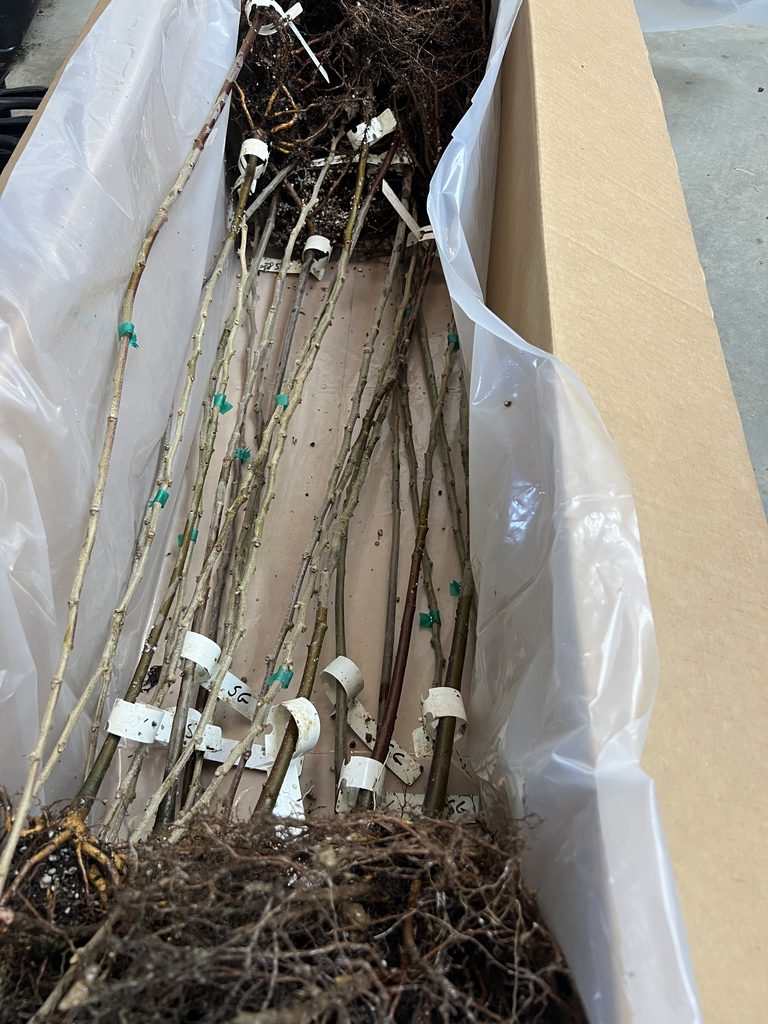
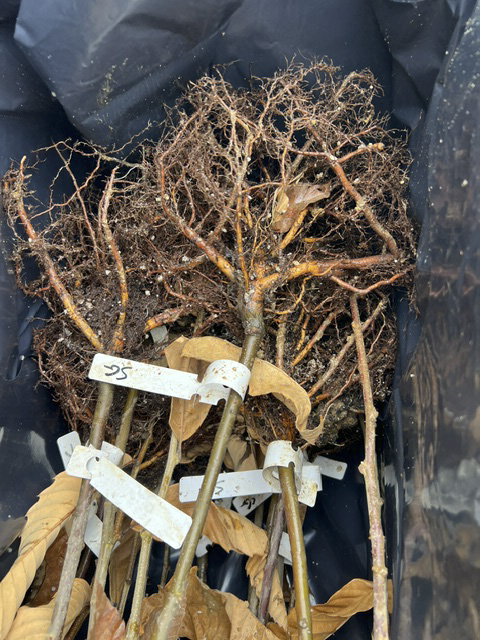
When you compare nurseries, ask to see photos of their roots. A good chestnut nursery will be proud to show you.
Picking Up Chestnut Trees at the Farm
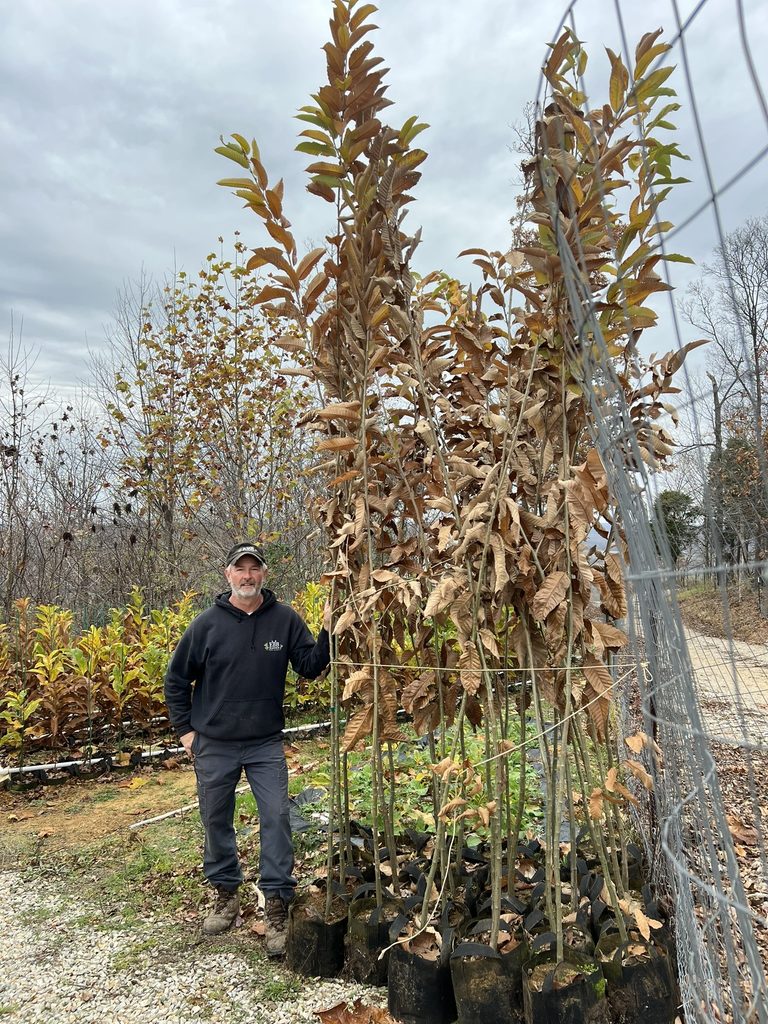
If you’re buying from a nursery in your region, we recommend picking up your trees whenever you can. Farm pickup means your seedlings go straight from our nursery to your vehicle instead of onto a UPS truck. At EBB Farms, it also opens up larger trees that are available for farm pickup only.
UMCA® PQK: The Chestnut Seedling We Recommend Most
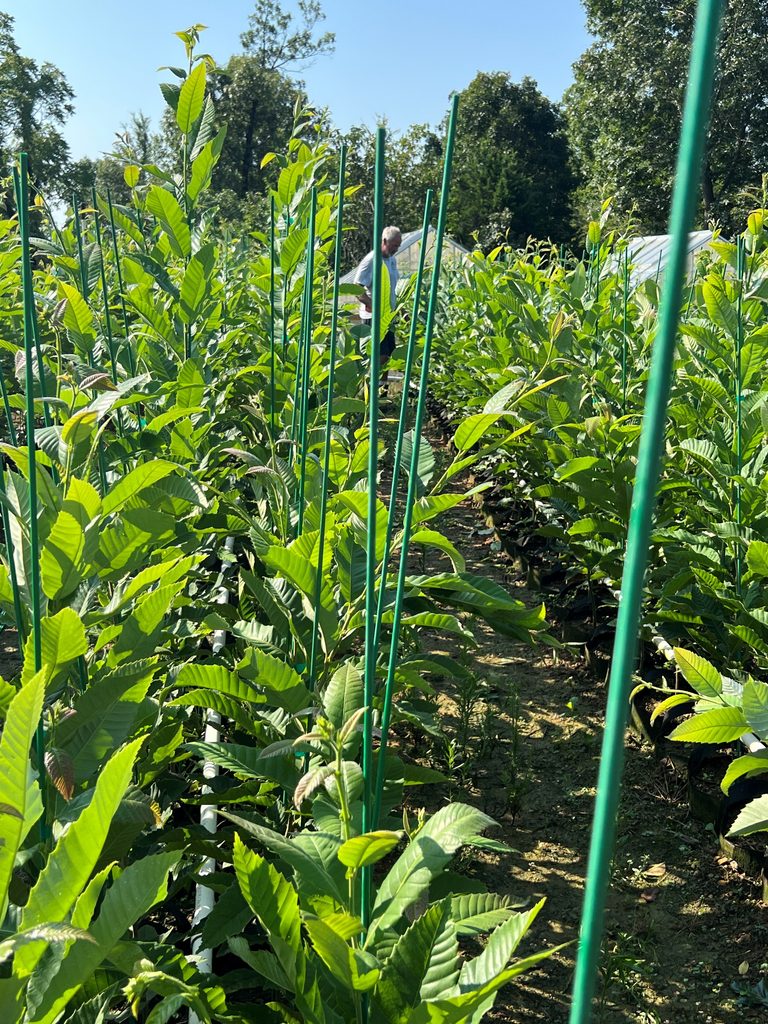
UMCA® PQK seedlings come from the University of Missouri Center for Agroforestry. They’re grown from a pollen-isolated orchard of three grafted cultivars, Peach, Qing, and Kohr, which the Center has evaluated since 1996 for yield, nut quality, frost avoidance, free-falling nuts, and disease resistance (UMCA).
- Late leafing, which helps avoid late spring frosts
- Bears nuts at a young age
- Nuts drop free from the bur for an easier harvest
- A longer, more manageable harvest window
At EBB Farms, UMCA® PQK is available as shipped seedlings and as 6- to 8-foot-plus trees for farm pickup.
Where To Buy Dunstan Chestnut Trees
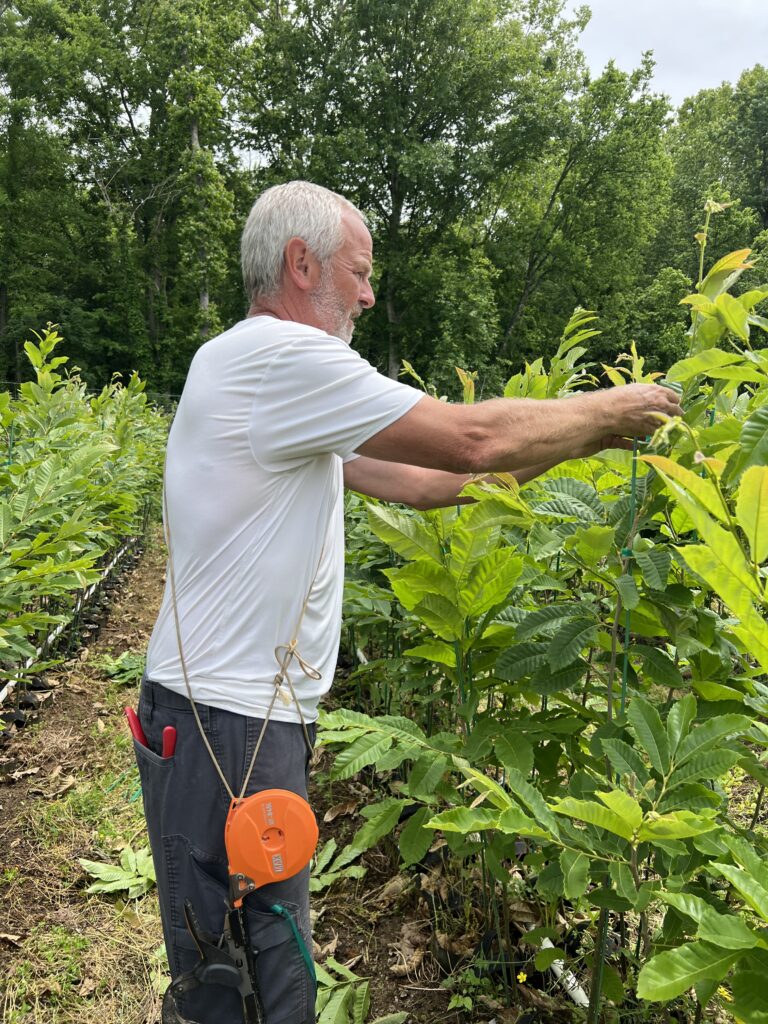
Dunstan is one of the most searched chestnut names. It’s an American x Chinese hybrid known for large, sweet nuts. If you’re looking for where to buy Dunstan chestnut trees, EBB Farms grows Dunstan seedlings from nuts of Dunstan mother trees in our own orchards. You can add them to any mix-and-match bundle in the EBB Farms store.
When you’re deciding where to buy Dunstan chestnuts, ask the seller exactly where their seedlings came from. A good chestnut nursery will tell you.
Where To Buy Blight-Resistant American Chestnut Trees
This is one of the most common questions we hear. The American Chestnut Foundation says the trees and seeds it currently offers are either improved trees from its breeding program with intermediate blight resistance, or wild-type American chestnuts with no blight resistance (TACF). If your goal is restoration, TACF and its state chapters are the place to start.
The genetically engineered Darling 54 American chestnut was deregulated by USDA in August 2026, but it still needs EPA review before it can be distributed to the public (SUNY ESF).
Chestnut Nurseries by Region
No single nursery is the right fit for every grower. Climate, cold hardiness, and overall suitability vary by region. Here are a few chestnut-focused nurseries worth knowing. We know each chestnut grower here and recommend. Contact each one directly about availability and shipping to your state.
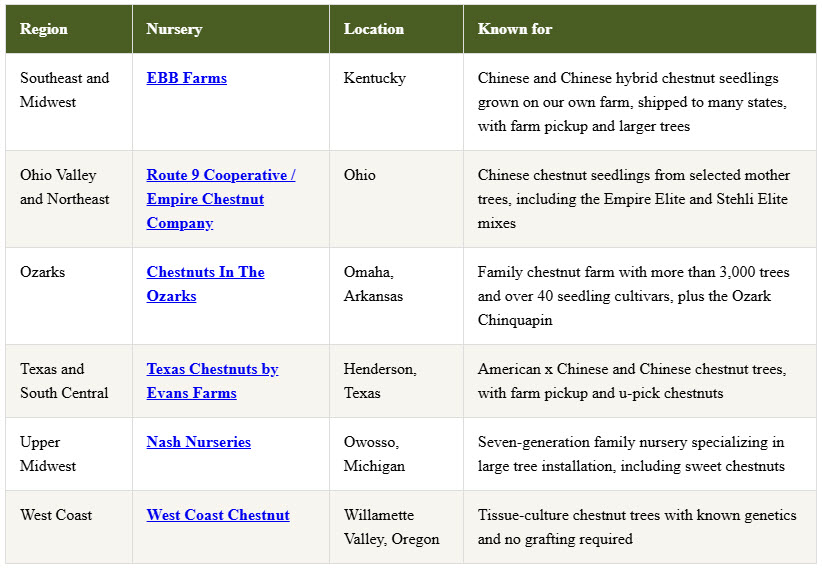
Where To Buy Chestnut Trees Near Me
The fastest way to find chestnut trees near you is the Chestnut Growers of America membership directory. It lists commercial chestnut growers, agricultural service providers, and industry partners across the United States, organized by region: California, the Midwest, the Northeast, the Northwest, the Southeast, and the Southwest. Use the map to find Spotlight Growers, or search the full directory.
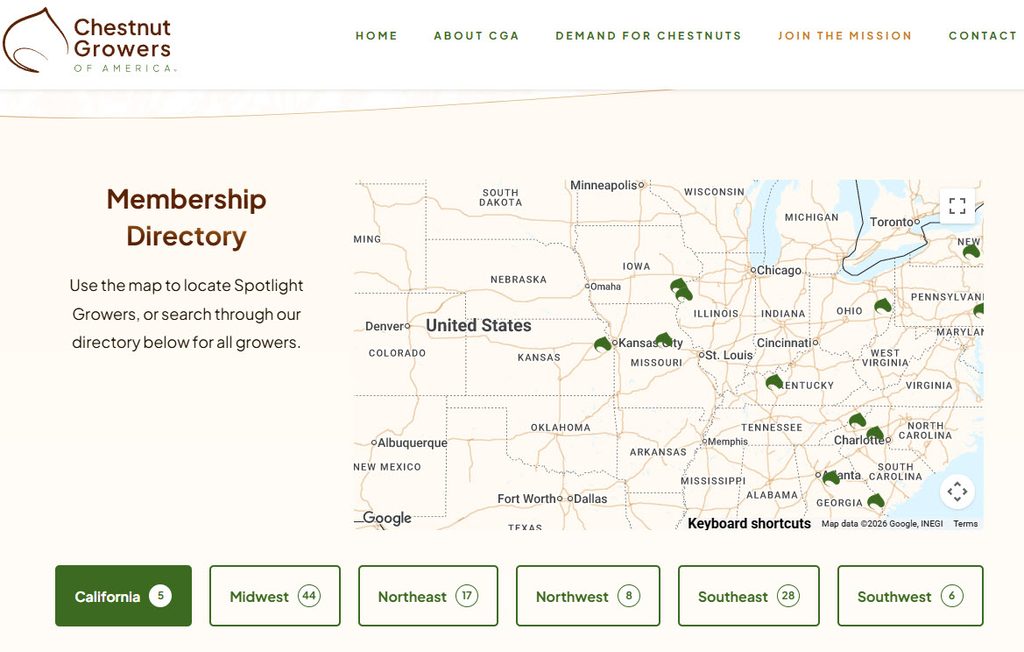
CGA membership also includes the Technical Resource Library, events, field days, and conferences (Chestnut Growers of America). We believe in CGA enough that our team helped rebuild its website and content strategy. Read more in Building the Runway: Why United Chestnuts Invested in CGA’s Future.
Questions To Ask Before You Buy Chestnut Trees
- What species is this tree, and is it suited to my region?
- Which mother trees or seed sources did these seedlings come from?
- Are these seedlings or grafted trees?
- How were the roots grown, and will the tree ship bareroot or in a container?
- If I’m nearby, can I pick up my trees at the farm?
- Do you grow chestnuts in your own orchard, and can I call you after planting?
If a nursery can answer all six with confidence, you’re likely in good hands.
Where To Buy Chestnuts To Eat
Some people searching “where to buy chestnuts” want the nuts, not the trees. Here’s where to purchase chestnuts:
- From a chestnut farm. Fresh, U.S.-grown chestnuts are harvested in the fall. EBB Farms ships fresh chestnuts from our orchards in season through the EBB Farms store.
- Near you. The CGA membership directory is also the best way to find chestnuts near you, since many growers sell nuts as well as trees.
- At the store. So where do they sell chestnuts? Grocery stores and specialty markets often carry them around the holidays, but many are imported and may have been in transit for weeks. Fresh chestnuts are perishable, so buy as close to the farm as you can.
Once you have them, head over to our How To Cook Fresh Chestnuts guide in the UC Academy. It covers storing, scoring, steaming, and roasting chestnuts.
Get A Free Guide
Want all of this in one place? Download the Where To Buy Chestnut Trees guide from the United Chestnuts Academy. It includes the regional nursery table, the questions to ask before you buy, and more.
Start With the Right Trees
Knowing where to buy chestnut trees is really about knowing who stands behind them. Whether you buy from us or from another chestnut specialist in your region, choose a nursery that grows chestnuts, knows its genetics, and will still be there to answer questions when your trees start bearing.
Book A Farm Tour.
Walk the Orchard With Us: EBB Farms Tour + Your Chestnut Blueprint
Thinking about chestnuts for your land? Spend two hours with Brad and Melanie at EBB Farms, a working chestnut tree farm and nursery in Falls of Rough, Kentucky. We’ll walk the orchard and nursery rows together. Then the United Chestnuts Academy team builds your custom Chestnut Blueprint, a written plan for your project that includes cost, revenue, and timeline projections based on current industry trends.
What’s included:
- A pre-tour questionnaire about your land and goals, so we skip the fluff
- A two-hour private tour of our orchard and nursery for up to 4 people
- Your custom Chestnut Blueprint, with:
- A 5-acre cost, revenue, and timeline projection
- Tree recommendations for your climate and soil
- Layout and spacing options
- A “first, second, third” priority list
- A follow-up recap email
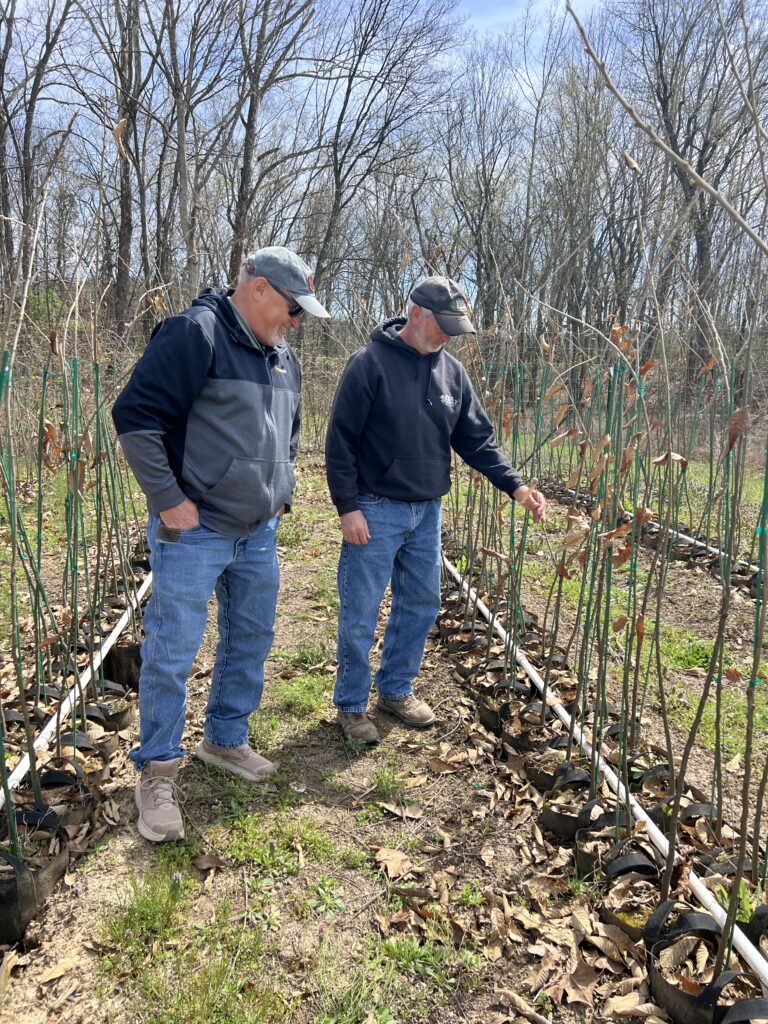
What Mert Adams, pictured above with Brad on a farm tour, had to say.
I just purchased another 12 chestnut trees from Melanie and Brad at EBB Farms. I am so happy with them I have laid out a plan to plant an entire hillside on my farm next year. ( 3 acres)
To be honest, I was going to quit planting trees at the end of 2025. I had purchased a number of sickly trees from far off mail order nurseries and retail stores and I was not happy with the growth of my orchard.
I was amazed when I toured Melanie and Brad’s farm this spring. Their trees were younger and much taller and healthier than the ones I had planted!.
You could tell immediately that growing healthy trees is their passion! What I appreciate the most is their commitment to helping me be successful in my planting.
I am retired and I don’t have a lot of time to fail at the things I am trying to accomplish. I got ZERO help and advice from my previous tree sources.
Melanie and Brad have become good friends and partners in my chestnut tree quest! If you want to be successful in helping to restore the chestnut tree to the U.S, I can think of no better place to start than EBB Farms! They are the best!
Mert Adams, Big Nut Chestnut Farm, West Union, Ohio
Frequently Asked Questions
Buy chestnut trees from a specialty chestnut nursery that grows chestnuts and knows its seed sources. EBB Farms in Kentucky grows and ships Chinese chestnut seedlings to many states. For other regions, use the Chestnut Growers of America membership directory.
Search the Chestnut Growers of America membership directory by region to find chestnut growers near you. In the Southeast and Midwest, EBB Farms offers farm pickup as well as shipping.
EBB Farms grows Dunstan chestnut seedlings from Dunstan mother trees in our own orchards and ships them to many states. Wherever you buy, ask the seller where their Dunstan seedlings came from.
he American Chestnut Foundation offers improved American chestnut trees with intermediate blight resistance through its programs. For a productive tree that stands up to blight today, we recommend Chinese chestnut.
Look for a chestnut farm near you in the Chestnut Growers of America membership directory, or order fresh chestnuts in season from the EBB Farms store. Buying close to the farm gives you the freshest nuts.
Chestnut seedlings usually ship while dormant, typically from late fall through spring. Popular varieties can sell out, so we recommend ordering early in the season.
If you’re buying from a nursery in your region, we recommend picking up your trees. It’s faster, and it’s often the only way to get larger trees. If you’re farther away, shipping works well.
Both have a place. Chinese chestnut seedlings are widely available and typically more affordable than grafted trees, while large orders of grafted trees often need to be custom ordered a year in advance.
Shipped chestnut seedlings arrive dormant and bareroot, with no leaves. That’s normal, and it’s the best time to plant. At EBB Farms, our seedlings ship at about four feet tall. Look for a full, fibrous root system with plenty of fine feeder roots, not just a single long taproot.