The EBB Confession: How Our Farm Name Started
We didn’t back into the name EBB Farms by accident—we loved it from the start. It stood for our dreams: Expect Big Bucks, with a perfect double meaning. At the time, we were imagining a place that might make a couple bucks and give us a lot of joy. It was rooted in whitetails, woods, and the kind of possibility that makes you bet on a piece of ground before you fully know what it will become. The original logo wore that dream on its sleeve: pine trees, antlers, the clear silhouette of a hunting tract turned side hustle.
As the years went by and the land turned into a farm-lab orchard and the beating heart of what would become United Chestnuts, the dream evolved. The name still fit in our mouths, but the story behind it had grown. EBB Farms was no longer just about big bucks—on the hoof or in the bank—it was about building something bigger than us. The logo was the first thing to change. The name stayed. The meaning caught up.
A farm name is a living thing. It either grows with you, or it becomes a fossil hanging on your gate.
The logo evolution simply made visible what was already true: a farm name and a farm brand are inseparable. The words on the gate didn’t change, but the visual language around them did—and that shift matters. In agriculture, names and brands carry real business value. They help a farm stand apart, build trust faster, and create the kind of recognition that carries through market swings and generational transitions.
Naming your farm is more than painting a name on the gate; it’s the first way people start to understand who you are and what this place might become.
What’s in a Farm Name
Names carry history, habit, and hope. In parts of Europe, a farm’s name could define a family for generations, sometimes even more strongly than a surname. In the U.S., a field name can be the first map a child learns, the shorthand for “where we belong.”
Names can come from the landscape (Ridge Hollow), lineage (McCulloch Place), function (Mill Orchard), or pure feeling (First Light). They are shorthand for memory—and for the story you want people to remember about your land.
Why New Landowners Name Their Farms First
For many new owners, naming your farm is the first practical ritual of belonging. It’s how ownership starts to feel like stewardship.
A name is also a compass: it quietly clarifies how a farm will show up on the land and in the market, long before there is a logo, a website, or a single paying customer. Many educators now talk about names and stories as the foundation of a farm brand, not an afterthought.
Where Good Farm Names Come From
Good farm names rarely arrive fully formed. They sneak up while someone walks the boundary lines, notices the creek that never freezes, remembers a grandmother’s nickname, or imagines the first crate heading to market. Many growers say they had to live with the land for a while before the right name finally stuck.
Three Frameworks for Naming Your Farm
Three quick frameworks tend to work well:
- Landscape: Features and flora that root the name in place, including hollows, ridges, creeks, soil color, and trees.
- Lineage: Family names, past owners, or local history worth honoring.
- Function / Promise: What the land is for, or the kind of experience it promises.
A Pick n Grin Farm Name Moment
Pick n Grin Farm is the kind of name that tells people both how to feel and what to do. On the Branching Out: Growing Together episode with Willie, he shared that “part of the inspiration for the name was the pick-and-grin music side of things,” and that if the land ever stopped inspiring music or poetry, he’d know he wasn’t listening closely enough.
The name holds that promise. This will be a place where people pick, grin, and stay long enough to be changed by the trees and the hills. It’s not just cute; it’s a brand in one line—joy, art, and regenerative work woven into a single invitation. Farm-branding specialists describe this as the power of a clear, emotionally charged identity: it signals who you are, who you’re for, and why you’re different in an instant.
Mountaineer Chestnuts and Legacy Land
Not every name comes from music. Another EBB Farms customer, Ellis, comes from a family of fruit orchards in West Virginia—the kind of place where thousands of trees are part of the family biography. When he decided to transition part of that orchard into chestnuts, he didn’t reach for something clever; he reached straight for who his people are and where they live. Ellis and Sam are both commercial pilots but building a dream together on the land.
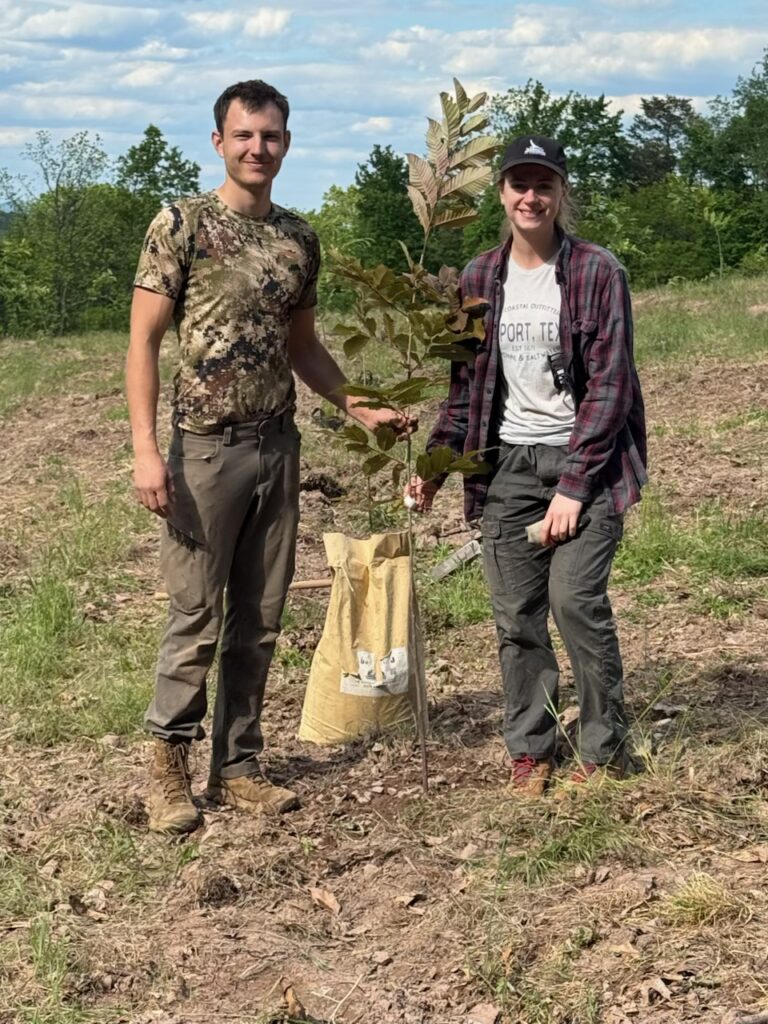
Everyone knows West Virginians are sports fanatics, so he proudly named the new venture Mountaineer Chestnuts. The sparkle in his eyes when he shared the news was unforgettable. In four syllables, he anchored a new chestnut block to a long fruit-growing legacy and a state identity. He also tapped into a fan base that already knows how to chant “Mountaineers.” When Ellis joins the Branching Out: Growing Together podcast to tell the story of shifting part of a large orchard into chestnuts, that name will become the hinge between past and future.
The D and the Power of “Just Ours”
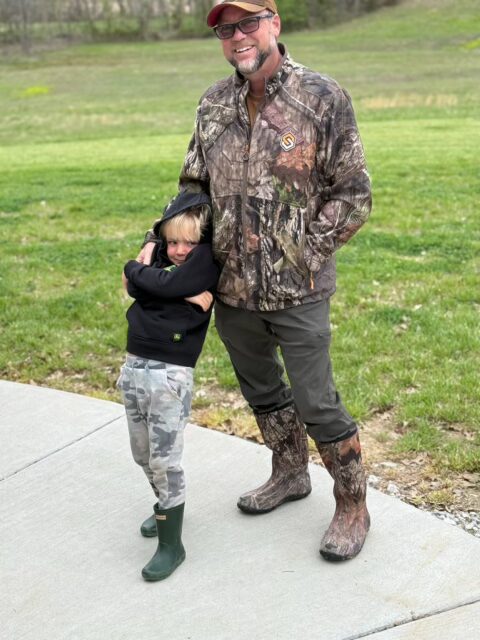
Not every farm name comes with a marketing plan behind it. A customer not far away in Kentucky said, “Way back in the day my cousin and I owned the property. He’s Douglas and I’m Dave, so we named the farm Double D. Then I bought him out and dropped the ‘double.’ Now we call the farm The D. Not necessarily exciting, but it’s our story.”
Dave and his grandson at “The D”
That kind of story is exactly the point. Most farm names are deeply personal and a little wonky. They are absolutely right for the people who have to say them out loud a hundred times a year. From the outside, The D might not sound like a brand, but it’s doing brand work anyway. It points to a history between two cousins, a transition of ownership, and a quiet confidence in keeping the name even after the partnership changed. Names like that are proof that authenticity beats cleverness every time.
Legacy Farms
Legacy Farms was named on purpose. Joe’s goal was to own real acreage, improve the habitat for wildlife, and build a place that could become a true legacy for children and future grandchildren. The logging and timber-stand work, the new food plots, and the rows of fruit trees, Sawtooth oaks, and chestnut trees have only deepened that sense of pride, because the land and the wildlife now show, in real time, what the name has been pointing toward all along.
Whether the story sounds more like Pick n Grin, Mountaineer Chestnuts, The D and Legacy Farms, the point is the same: a farm’s name should feel like home in the owner’s mouth and like an invitation in everyone else’s.
Why We Named It United Chestnuts
Naming United Chestnuts felt different from naming EBB Farms. With EBB, the name belonged to one patch of ground. With United Chestnuts, the name needed to hold a future big enough to unite chestnut growers across the U.S.
“United” did two jobs at once. It spoke to the growers the platform wanted to bring together—scattered orchards, new plantings, restoration projects, and legacy farms—and it nodded at the work still needed to make chestnuts a serious category in American agriculture again. “Chestnuts” kept it simple and honest. Put together, United Chestnuts became a banner growers could stand under without losing their own identities on the gate.
EBB Farms is the rootstock; United Chestnuts is the graft. One name holds a personal farm story, and the other holds the shared mission to modernize an industry, connect growers, and help the next person planting a chestnut tree find their people faster.
From Sentiment to Strategy in Farm Naming
How Brand and Pricing Connect on Farms
A name is sentimental only until it is put to work. The minute a farm sells product, invites visitors, or tells its story online, the name changes. It becomes the first brick in the brand. Farm-branding research and extension guidance are clear on this point: branding helps farms differentiate in crowded markets, build customer loyalty, and, in some cases, support premium pricing. University of Nevada Extension goes even further, noting that branded products are generally able to earn higher prices and that strong brands can create more stable, repeat customer relationships over time.
The right name feeds everything else. It shapes packaging and signage, origin story, search terms customers actually type, and the kind of emotional hook that attracts people willing to pay more for provenance and taste. For small farms especially, brand is one of the few levers that can pull a business out of commodity thinking. It can move you into relationship-based business instead. Research summarized by Nevada Extension notes that the top brand in a market can command a meaningful premium over competitors. Loyal brand customers also spend far more over time than lowest-price shoppers.
That matters in chestnuts because many growers are not selling a product people already understand. They are selling education, trust, curiosity, and a reason to try something unfamiliar. A strong name and a clear brand help do that work before a single handshake at market or a single product page goes live. Penn State Extension frames this emotional connection as a key part of why customers seek out a farm again rather than treat it like a one-off transaction.
Whether a story sounds instantly “brandable” like Pick n Grin and Mountaineer Chestnuts or as simple and personal as The D and Legacy Farms, the job is the same: choose a name that rings true, then give it the brand support it deserves. Practical branding advisors in agriculture make the same point: clarity around story and identity shapes who buys from you, what they will pay, and whether they come back.
United Chestnuts Academy: Naming, Story, and Chestnut Orchards
United Chestnuts exists to help accelerate an industry, and part of that work is helping growers name what they are building and tell the story behind it. A strong farm name is not just sentimental. It is often the front door to a brand—the first signal customers get about who a grower is, what they value, and why their farm matters.
Content is being built now to support subscribers who want help not just growing chestnuts, but growing a chestnut orchard and a chestnut business people can understand and remember. That includes the practical nuts and bolts—layout, planting, management, and marketing—along with the storytelling and brand work that ties it all together.
United Chestnuts Academy, launching in the summer of 2026, is designed to be the spine of that support system. It is an online learning hub for chestnut growers who want modern, usable training on orchard planning, planting, management, markets, storytelling, and brand. Universities and extension systems increasingly treat this mix of production, business planning, and branding as core to running a viable farm, not optional extras.
Names, education, and storytelling all feed each other. The long game is not to turn every farm into a polished marketing machine. It is to help more growers bring their visions to life. That might mean commercial plantings, hunting properties, regenerative systems, or converting row crops to perennials.
A farm name deserves to grow with the land. If EBB’s evolution, Pick n Grin Farm, Mountaineer Chestnuts, The D, Legacy Farm or the story behind United Chestnuts made something click—and if there is uncertainty about naming your farm or how to tell the story behind it—United Chestnuts can help.
Content is being built now and will begin rolling out in summer 2026.
Further Reading on Farm Branding
For growers who want to dig deeper into the business case for branding, a few resources are especially useful:
Branding Your Farm Business — Penn State Extension
Adding Value to Agriculture: Branding and Certification — University of Nevada Extensio
Key Takeaways
- EBB Farms represents a journey from financial dreams to a commitment to community and stewardship in agriculture.
- A farm name is more than a title; it’s a reflection of history, identity, and emotional connection to the land.
- Good farm names often evolve from experiences, landscape features, or personal stories, and they should resonate with the owners.
- Naming your farm serves as the foundation for branding, building trust, and attracting customers in a crowded market.
- United Chestnuts aims to support growers in effectively naming their farms and sharing their stories for greater impact.